How Rates Translate Directly Into Purchasing Power
The most immediate consequence of a rising mortgage rate is a shrinking budget. Consider a household that can afford $2,200 per month in principal and interest. At a 4% interest rate on a 30-year fixed mortgage, that payment supports roughly a $460,000 loan. At 7%, the same monthly budget covers closer to $330,000 - a difference of $130,000 in purchasing power, without the household's income changing at all.
This compression forces buyers to make real trade-offs: smaller homes, farther locations, or delayed purchases. For first-time buyers operating near the edge of affordability, even a modest rate move can push homeownership out of reach. For a broader look at how underlying data shapes these conditions, see housing market fundamentals.
~10-11%
Purchasing power lost per 1-point rate increase
A widely cited industry rule of thumb, reflecting the compounding effect of higher interest on a 30-year fixed mortgage payment.
~$400B+
Decline in mortgage originations during rate spike periods
Mortgage Bankers Association data consistently shows sharp origination volume declines when rates rise significantly over a short period.
Millions
U.S. homeowners estimated to hold sub-4% mortgages
Industry analysts have estimated that a large share of U.S. mortgages were originated during the historically low-rate environment of 2020-2021, reinforcing the lock-in effect.
The Inventory Paradox: Why Rising Rates Tighten Supply
Counterintuitively, higher mortgage rates can actually reduce the number of homes available for sale - a dynamic often called the "lock-in effect." Homeowners who secured mortgages when rates were significantly lower have little financial incentive to sell. Moving to a new home would mean giving up a 3% or 4% mortgage and replacing it with one at 6.5% or higher, adding hundreds of dollars per month to their housing costs.
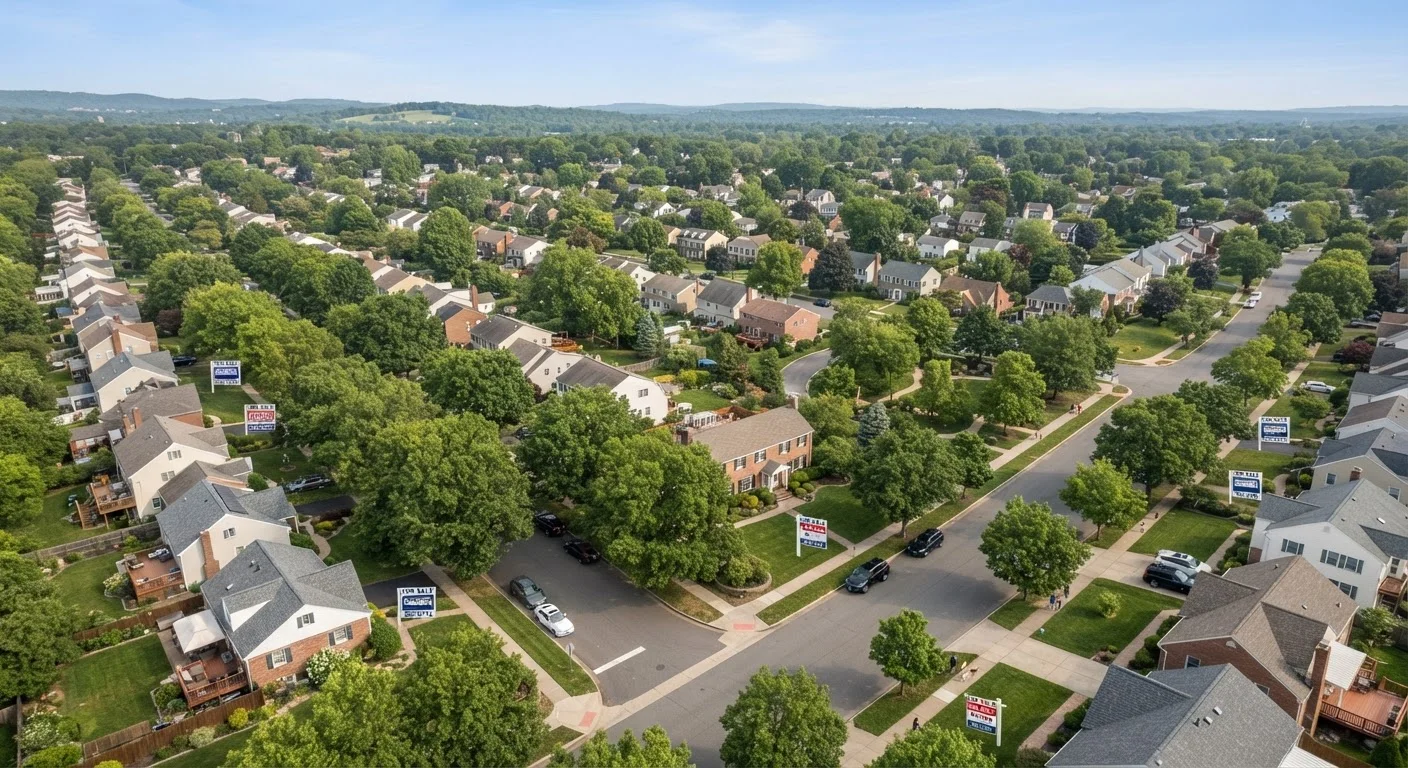
The result is a market where demand has cooled but supply has not expanded to match. Fewer listings mean buyers still compete for a constrained pool of homes. This helps explain why rate increases haven't always produced the steep price declines some expected. For a deeper dive into how supply shapes market dynamics, understanding housing inventory provides essential context.
Price Trends: Softening Is Not the Same as Crashing
Rising rates do apply downward pressure on home prices by cooling buyer demand. In markets where prices had risen steeply during low-rate periods, some correction is possible. However, the supply constraints described above tend to put a floor under prices - sellers simply aren't desperate to accept deeply discounted offers when inventory remains tight.
What buyers more commonly experience is a slower market: fewer bidding wars, longer days on market, and more room to negotiate on concessions. These are genuine improvements in buyer leverage, even if headline prices haven't fallen dramatically. The underlying forces driving price behavior are explored in detail in why home prices rise and fall.
Renting, Buying, and Loan Structure in a High-Rate Environment
When monthly mortgage costs rise sharply, the financial advantage of buying over renting narrows or reverses in many markets. Renting preserves flexibility and avoids the full cost of financing at elevated rates - making it a more defensible choice for buyers who are uncertain about their timeline or local market conditions. Renting versus buying in today's market examines these trade-offs in detail.
For those committed to buying, loan structure becomes a more important decision. Adjustable-rate mortgages carry a lower initial rate, which can be advantageous for buyers who expect to sell or refinance within a defined window - but they carry meaningful risk if rates remain elevated. Fixed-rate loans offer payment certainty. Understanding which structure fits a given situation is covered in fixed-rate vs. adjustable-rate mortgages.
This article is for general informational purposes only and does not constitute financial, mortgage, or investment advice. Readers should consult a licensed mortgage professional or financial adviser before making borrowing or purchasing decisions.