
Why Savings Myths Are So Persistent
Most people know they should be saving. Yet survey after survey finds that a large share of Americans have little or no emergency cushion. The gap between knowing and doing is rarely about laziness - it's often about believing something that isn't quite true.
Savings myths feel logical on the surface. They tend to match how we emotionally relate to money: it's complicated, there's never enough, and there will be a better time to deal with it later. The problem is that each of these beliefs quietly delays progress and makes the goal feel further away than it actually is.
This article addresses the most common misconceptions head-on. If any of these sound familiar, you're not alone - and the correction may be simpler than you expect. For a companion look at how these same patterns play out with budgeting, see common budgeting myths that also hold people back.
Myth
I don't earn enough to save anything meaningful right now.
Fact
Saving a small amount consistently is more valuable than saving nothing while waiting for a higher income.
The belief that saving only makes sense above a certain income threshold is one of the most common barriers to getting started. In reality, the habit itself is the asset. A person who saves $20 a week builds both a financial cushion and a behavioral pattern that tends to scale as income grows.
The math supports starting small: even modest sums in an interest-bearing account grow over time through compounding - where you earn returns on your returns. To understand how the rhythm of deposits interacts with growth, see why deposit frequency matters as much as amount.
Myth
I'll start saving once things settle down - after the holidays, after I pay off this bill, after I get a raise.
Fact
Financial life rarely reaches a stable plateau. Waiting for the 'right moment' typically means not starting at all.
There is almost always a compelling reason to delay: an unexpected expense, a busy season, a looming change. But financial research on procrastination shows that people who postpone saving consistently underestimate how many 'temporary' obstacles they'll face in sequence.
The cost of waiting isn't just psychological - it's measurable. Every month of delay is a month where your money isn't growing and your habit isn't forming. Starting with even a token amount during difficult periods preserves the behavior and the account balance.
Myth
Saving money means I have to give up everything I enjoy.
Fact
Effective saving is about intentional trade-offs, not deprivation - and most people find workable cuts without eliminating what matters most.
The all-or-nothing framing makes saving feel punishing before it's even attempted. In practice, most people who examine their spending find areas of low personal value that are easy to reduce - subscriptions they forgot about, habitual purchases that don't bring much satisfaction - alongside spending they actively value and want to protect.
A workable personal budget isn't a list of restrictions; it's a map of where your money goes and an opportunity to redirect some of it toward goals you care about. Saving and enjoying your life are not mutually exclusive.
Myth
I need to figure out exactly how much to save before I can start.
Fact
Choosing a specific, realistic target helps - but waiting for the perfect plan is just another form of delay.
Perfectionism around savings goals is a real obstacle. People spend time researching the 'right' savings rate, the ideal account type, and the optimal strategy - and never open an account or move a dollar.
Starting with an imperfect plan beats not starting. You can refine your target as you go. If you want guidance on building goals that are both realistic and motivating, setting savings goals you'll actually reach offers a practical framework. And if you're curious about how savings rate benchmarks work, understanding your savings rate is a helpful starting point.
Myth
Keeping money in a savings account is pointless because interest rates are too low to matter.
Fact
The primary purpose of a savings account - especially early on - is separation and accessibility, not yield. Interest is a bonus.
This myth conflates two separate goals: building a habit and maximizing returns. A savings account's most important early function is keeping money out of your everyday spending flow. Even at a modest interest rate, money that is separated is money that is protected.
That said, not all savings accounts are equal. If you're curious about the structural differences in how accounts work, our comparison of high-yield vs. traditional savings accounts explains what to look for. For those who do accumulate a larger cushion over time, there are also real tradeoffs to holding too much cash in savings worth understanding.
How to Move Forward Once the Myths Are Out of the Way
Correcting a false belief is only the first step. The second is replacing inaction with a concrete, low-friction habit. Research on financial behavior consistently shows that people who automate savings - moving money to a separate account before they can spend it - save more reliably than those who rely on whatever is left at month's end. If you've never tried this approach, our guide to automating your savings explains exactly how to set it up.
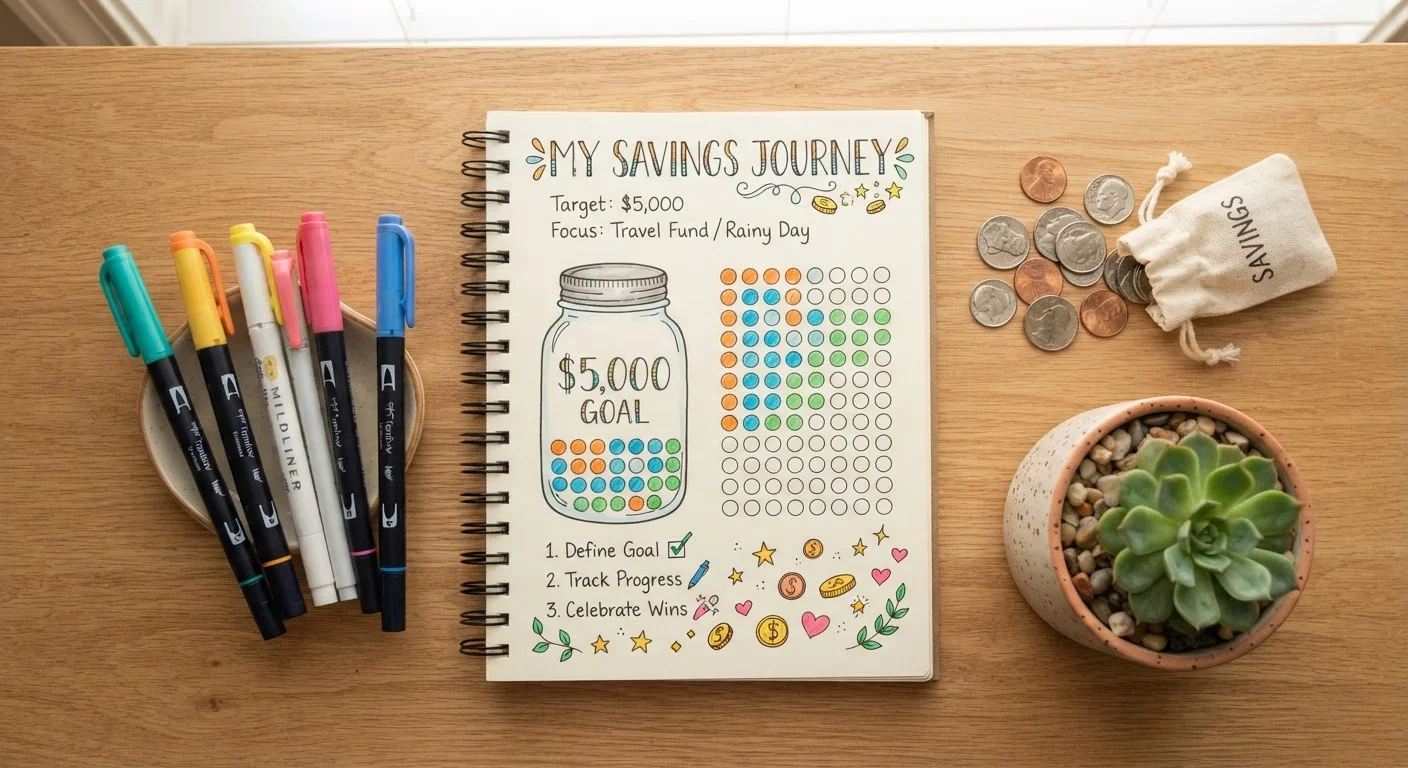
It also helps to give your savings a purpose. A labeled goal - "car repair fund," "three-month cushion," "vacation" - is psychologically easier to protect than a vague pile of money. You can explore how different people mentally frame savings goals to find an approach that fits your personality.
~57%
Americans with less than $1,000 in savings
Surveys conducted by financial research organizations have consistently found that a majority of U.S. adults have minimal liquid savings available for emergencies.
$20/week
Weekly amount that builds over $1,000 in a year
Setting aside just $20 each week adds up to more than $1,000 in 12 months - before any interest - illustrating how small, consistent deposits accumulate meaningfully.
If you're truly starting from zero, don't let the blank slate discourage you. Our beginner's guide to building a savings habit walks through the mindset shifts and practical first steps that make consistent saving achievable - regardless of where you're starting from.
This article is for general informational and educational purposes only and does not constitute personalized financial advice. Consult a qualified financial professional for guidance tailored to your individual circumstances.