
Why Most First-Time Savers Struggle
If you've tried to save before and it didn't stick, you're in good company. Most people who struggle to save consistently aren't doing anything wrong - they're just starting with the wrong frame. Saving feels like deprivation, an act of saying no to things you want today for some fuzzy benefit in the future.
The problem isn't willpower. It's that the goal isn't real enough to compete with today's demands. When 'save more' sits on a vague mental list alongside 'eat better' and 'stress less,' it rarely wins. Before building a system, you need a reason - a specific, personally meaningful one.
It also helps to acknowledge that most Americans don't grow up receiving structured financial education. If saving feels foreign or complicated, that's not a character flaw; it's a gap this guide is designed to help close. Check out our Budgeting Basics hub for a foundation in tracking what you spend before you decide what to save.
Savings habit
A consistent, recurring behavior of setting aside money - usually tied to a schedule - that becomes automatic over time rather than requiring active effort each time.
Savings goal
A specific financial target with a defined dollar amount and timeframe, such as saving $500 in four months for an emergency fund.
Automated transfer
A scheduled, recurring movement of money from one bank account to another - often set up so savings happen automatically on payday without manual action.
Emergency fund
A reserve of money set aside specifically to cover unexpected expenses - like a car repair or medical bill - so they don't derail your regular budget or force you into debt.
Liquidity
How quickly and easily a financial asset can be converted into cash without significant loss. A savings account is highly liquid; money in it can typically be accessed within days.
Pick One Goal That Actually Matters to You
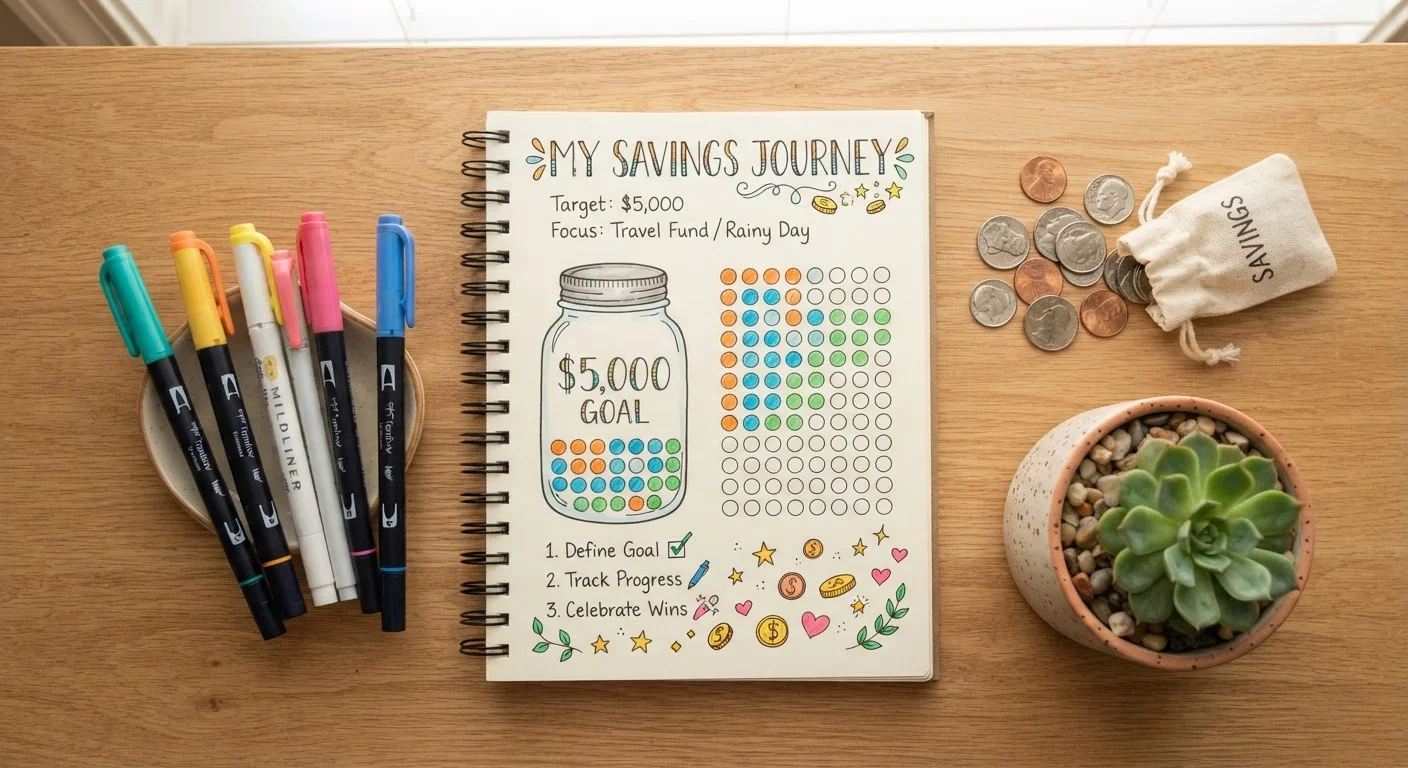
The most effective savings goals share two qualities: they are specific, and they are personally meaningful. 'Save money' is not a goal. 'Save $600 for a car repair fund by the end of six months' is a goal your brain can work with.
Start by asking yourself what financial stress you'd most want to eliminate, or what milestone would genuinely change your daily life. A small emergency cushion, a planned trip, or replacing a worn-out appliance are all valid starting points. The goal doesn't have to be impressive - it has to be yours.
Once you have a goal, give it a number and a timeframe. Divide the total by the number of weeks or pay periods between now and your deadline. That's your target deposit amount. For more on how different people approach goal-setting mentally, see ways people frame savings goals.
Name Your Savings Account After Your Goal
Many banks allow you to nickname savings accounts in their app or online portal. Labeling an account 'Emergency Buffer' or 'Car Fund' makes the purpose concrete and adds a small psychological barrier to spending the money on something else. It's a simple step that helps the goal feel real.
Start Smaller Than You Think You Should
New savers often set ambitious targets and abandon them within a month. A more reliable approach: set a starting amount that feels almost too easy. If you think you can save $100 a month, start with $40. Succeed at $40 for two months, then increase. This approach trades a fast start for a durable habit.
The amount matters less than the rhythm. Research on behavior change consistently finds that small, repeated actions build stronger habits than large, sporadic ones. Small, consistent deposits can carry more long-term weight than the occasional large transfer - the regularity signals to you that saving is simply what you do.
As your income grows or your expenses shift, you can increase the amount. But the habit itself - the weekly or biweekly rhythm of setting money aside - is the real asset you're building right now.
Build a Simple System That Works on Autopilot
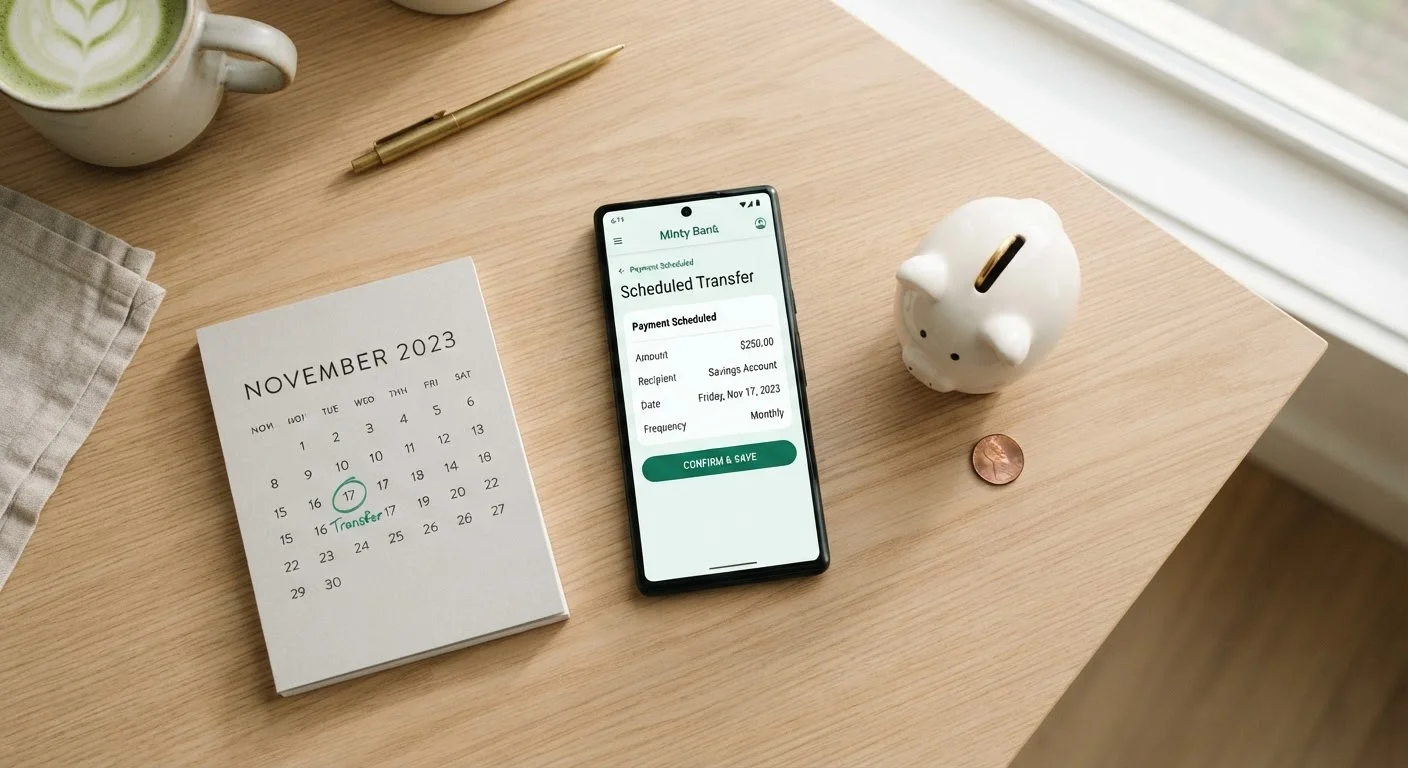
The most reliable savings strategy is one that doesn't depend on you remembering to act. Automating a transfer - even a small one - from your checking account to a designated savings account on payday removes the decision entirely. Money moves before you have a chance to spend it.
Keep your savings account separate from your everyday spending account. Out of sight tends to mean out of reach, which reduces the temptation to dip in for non-emergency expenses. For a step-by-step look at setting up and managing automation, see how savings automation actually works.
If automation isn't available through your bank, a calendar reminder set for payday can serve a similar purpose - pair it with a recurring task to manually transfer your target amount before paying any discretionary expenses. The structure matters more than the method.
Protect the Habit When Life Gets in the Way
Unexpected expenses, income dips, and busy months will all threaten your savings habit at some point. The goal isn't to avoid disruptions - it's to build a habit resilient enough to survive them. That means defining in advance what 'pausing' looks like versus giving up entirely.
If a difficult month forces you to skip or reduce a deposit, treat it as a planned pause rather than a failure. Resume the following pay period, even at a reduced amount. Missing once doesn't erase the habit; abandoning the system does. Building an emergency fund into your budget is one of the best ways to protect your savings habit - a small financial cushion prevents a surprise expense from unraveling everything else.
As you reach your first goal, take a moment to acknowledge it before setting the next one. That pause matters. It reinforces that your system works, and that you are, in fact, someone who saves. From there, you can begin thinking about how your goals evolve over time with a complete guide to saving across life stages.
This article is for general informational and educational purposes only. It does not constitute personalized financial advice. Please consult a licensed financial professional for guidance specific to your circumstances.
Your First Goal Doesn't Have to Be Perfect
The point of your first savings goal isn't to be financially optimal - it's to prove to yourself that saving consistently is something you can do. A modest, achievable target completed successfully does more for your long-term financial confidence than an ambitious goal abandoned halfway through.