Two Opposite Starting Points
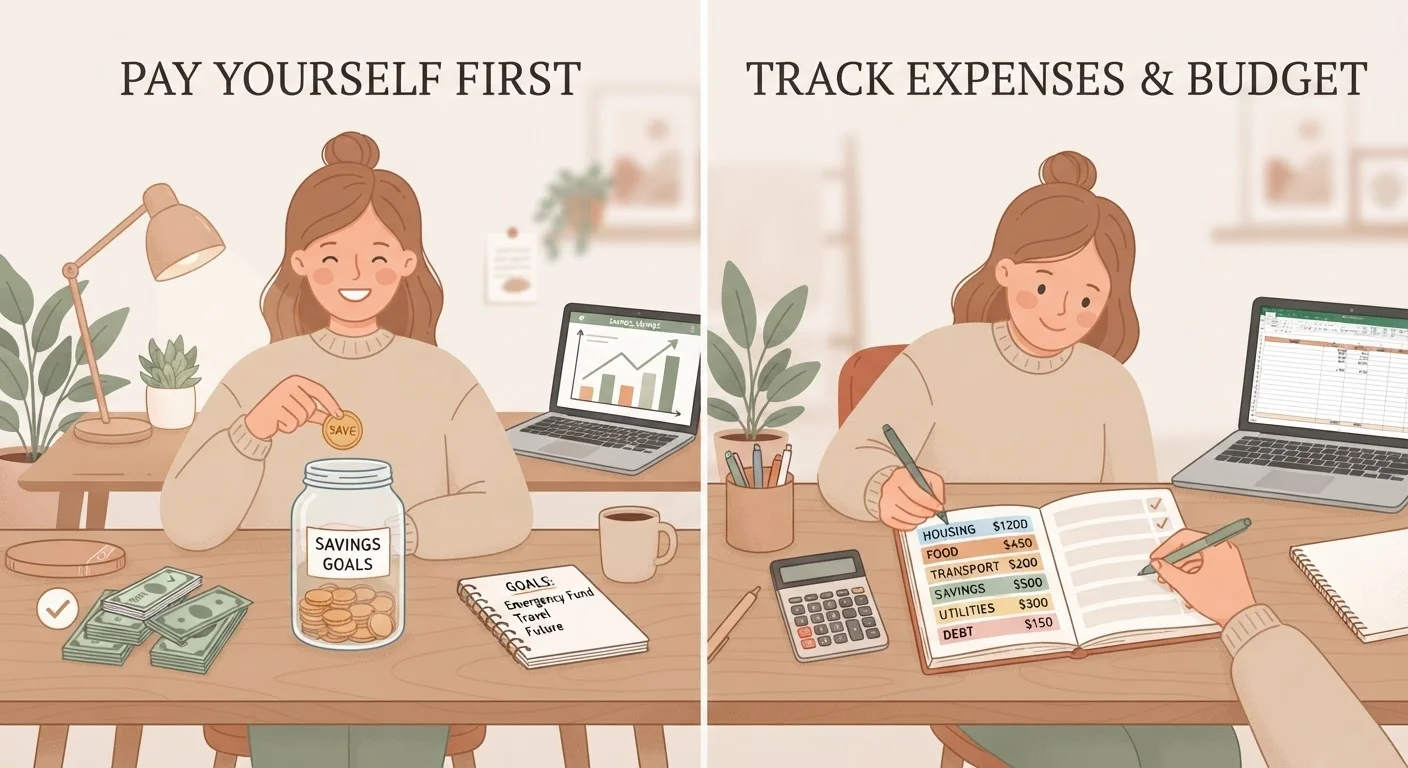
Most people think about budgeting in one direction: income comes in, bills get paid, and whatever is left becomes savings. That's the traditional approach, and it's intuitive. But a competing framework flips that sequence entirely - savings come out first, and you live on what's left.
These two philosophies - paying yourself first versus traditional budgeting - share the same end goal of financial stability, but they make very different assumptions about human behavior and what motivates consistent action. Understanding how each one works helps you choose the structure most likely to stick. For a broader look at foundational strategies, see the Budgeting Basics hub.
How Paying Yourself First Works
The core mechanic is simple: before you pay any bill or make any purchase, a fixed amount moves into savings - ideally automatically on payday. Your checking account receives only what remains after that transfer, and you build your spending life around that reduced figure.
The behavioral logic is significant. By treating savings as a non-negotiable expense rather than a leftover, the system bypasses the common problem of spending creeping up to meet available income. Automation is key here; a manual transfer that requires a conscious decision each month is far easier to skip.
Start Small With Automated Transfers
If you're new to paying yourself first, begin with a modest fixed amount - even a small recurring transfer builds the habit without straining your monthly cash flow. You can increase the amount gradually as you get a clearer picture of your actual expenses. The goal is consistency, not perfection from day one.
This approach tends to work well for people with stable, predictable paychecks. It can be more challenging for freelancers or gig workers whose income varies month to month - for strategies tailored to that situation, see budgeting on an irregular income.
How Traditional Budgeting Works
Traditional budgeting begins with a complete picture of income, then systematically allocates money to fixed expenses (rent, insurance, loan payments), variable necessities (groceries, utilities), discretionary spending, and finally savings. The goal is that every dollar has a designated place before the month begins.
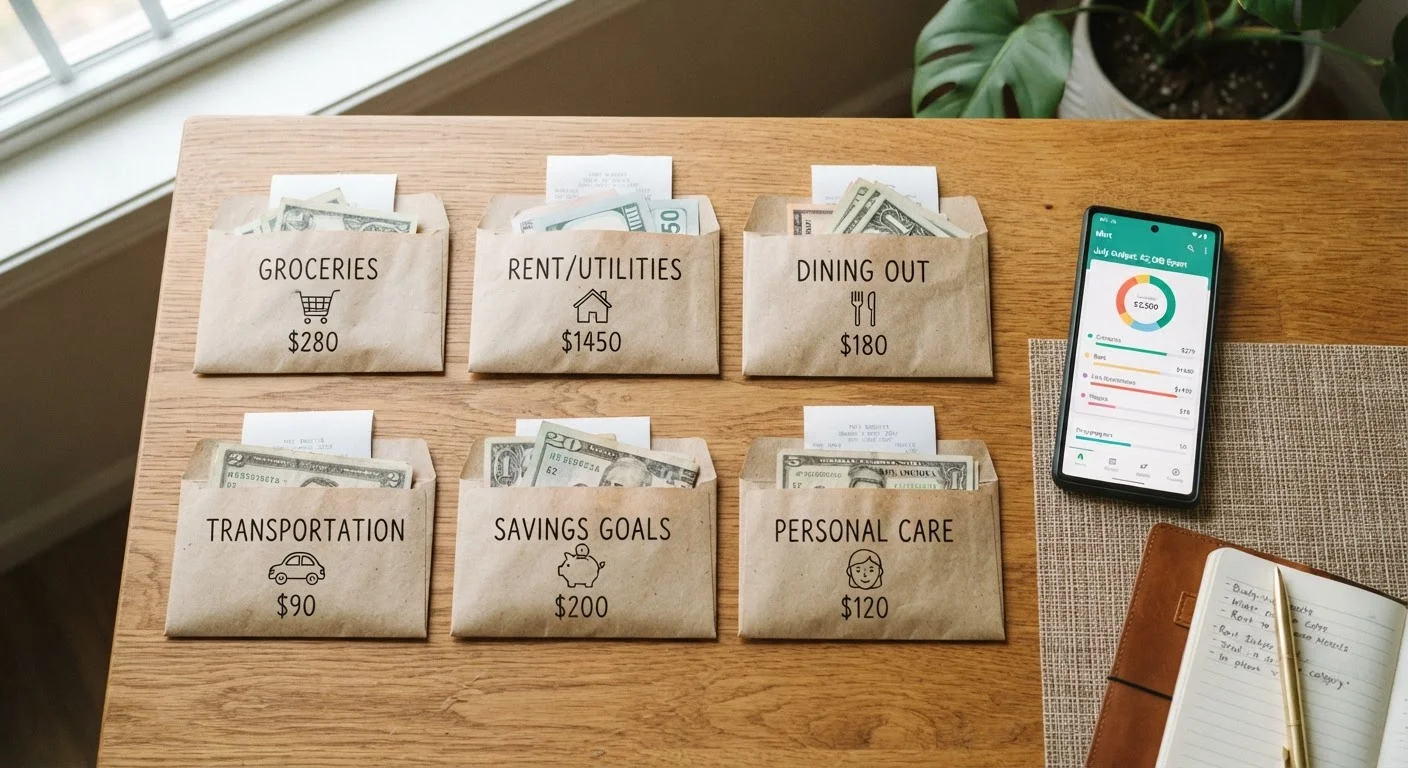
This approach prioritizes awareness and control. You see exactly where your money is going, which makes it easier to identify waste, adjust for irregular expenses, and make deliberate trade-offs. Methods like zero-based and percentage-based budgeting fall under this broader category - for a direct comparison of those two, visit zero-based vs. percentage-based budgeting. The envelope method is another well-established variant explored in envelope budgeting.
The main vulnerability of traditional budgeting is that savings remain last in line. When unexpected costs arise mid-month, the savings allocation is the easiest category to cut.
| Paying Yourself First | Traditional Budgeting | |
|---|---|---|
| Starting point | Savings transferred before spending | Income allocated across all expenses first |
| Automation potential | High - easily set-and-forget | Lower - requires active monthly planning |
| Spending visibility | Limited without added tracking | High - categories tracked explicitly |
| Best income type | Stable, predictable paycheck | Stable or variable income |
| Savings consistency | High if amount is calibrated correctly | Variable - savings may be cut for expenses |
| Effort required | Low after initial setup | Moderate to high, ongoing |
| Risk | Over-saving can strain bill payments | Under-saving if discipline lapses |
Weighing the Trade-Offs
Neither method is inherently better - each has structural strengths that match specific situations.
Paying yourself first is powerful for building savings momentum with minimal ongoing effort. Its weakness is that it can obscure financial reality: if the savings amount is set too high relative to actual expenses, you may end up raiding savings or accumulating debt to cover essential bills.
Traditional budgeting provides visibility that paying yourself first can lack. You're more likely to catch overspending in specific categories early and adjust before it compounds. However, it requires ongoing attention and discipline - if you're meticulous one month and lax the next, savings become inconsistent.
Households budgeting together face additional coordination challenges with either method. The shared finances budgeting guide covers how couples and households can align on whichever framework they choose.
It's also worth noting that if you're managing debt alongside saving, your approach may need to account for payoff strategy as well. See debt avalanche vs. debt snowball for a look at how repayment methods interact with saving goals. More broadly, the Debt & Credit hub offers context on managing both simultaneously.
This article is for general informational purposes only and does not constitute personalized financial advice. Consider consulting a qualified financial professional for guidance specific to your situation.