Where the Envelope Method Comes From
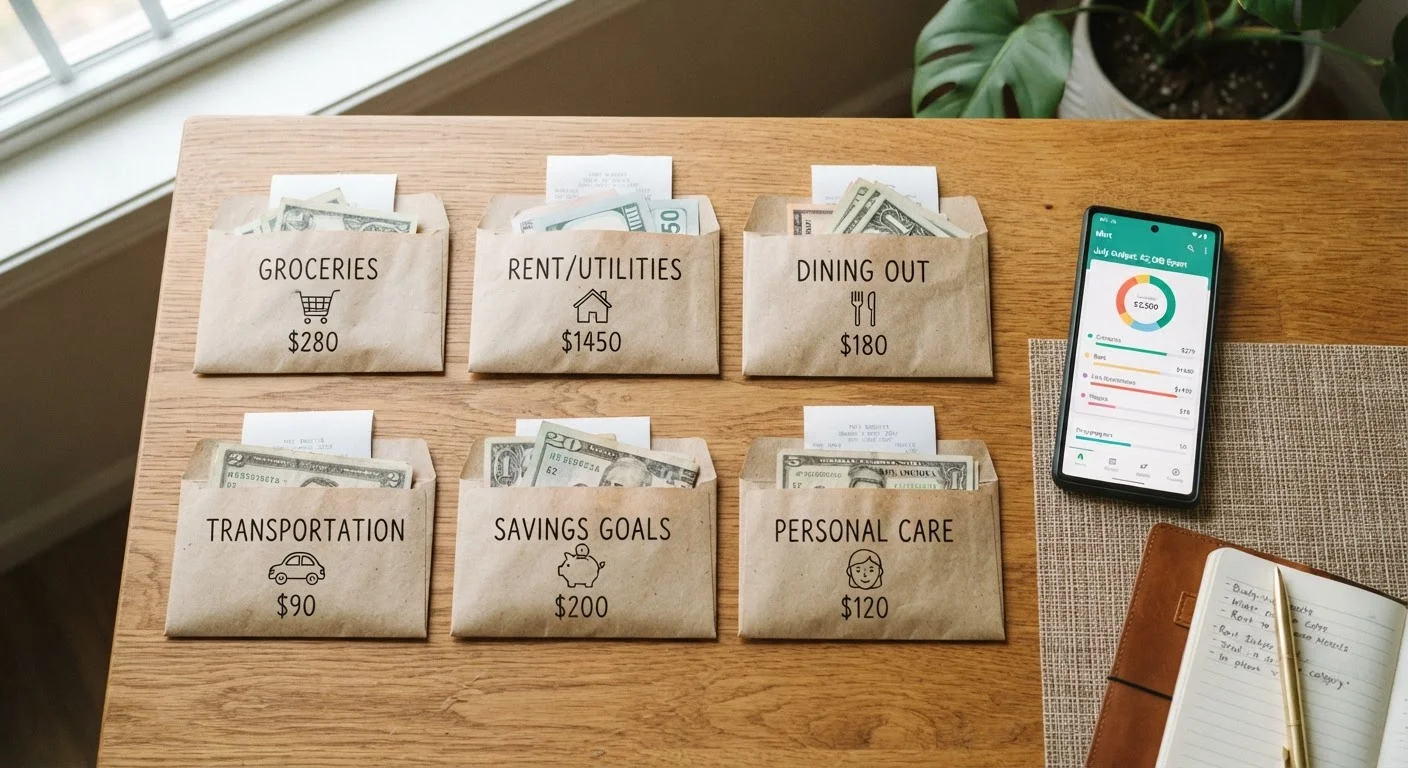
The envelope budgeting method has been around for generations, popularized as a practical tool for households managing tight budgets before credit cards became common. The concept is simple: you cash your paycheck, divide the bills into labeled envelopes, and spend only from the relevant envelope when a purchase comes up. Once an envelope is empty, that spending stops.
The appeal was never really about the paper. It was about creating a physical boundary between money that was spoken for and money that wasn't. Before smartphones and digital accounts, the envelope was just the most convenient way to enforce that boundary.
If you're not yet familiar with terms like discretionary spending or cash flow, our plain-language budgeting glossary is a good starting point before diving deeper.
How the System Works, Step by Step
Setting up an envelope budget follows the same logic whether you're using cash or a digital tool:
- Start with your take-home pay. Use your actual net income - what lands in your account after taxes and deductions - not your gross salary. For a solid picture of where your money already goes, review your past spending honestly before building your first budget.
- List your spending categories. Common ones include housing, groceries, transportation, utilities, dining out, entertainment, clothing, and savings. Your list should reflect your actual life.
- Assign a dollar amount to each category. The total of all envelopes should equal your take-home pay. Every dollar gets a destination.
- Spend only from the right envelope. When you buy groceries, that money comes from the grocery envelope only. When it's gone, it's gone.
- Reset at the start of each month. Refill envelopes according to your plan. Leftover cash can be rolled over or redirected - intentionally.
~33%
Americans with a written budget plan
Surveys by financial research organizations consistently find that roughly one in three U.S. adults follows a formal budget, suggesting most households could benefit from more structured spending frameworks.
$500+
Typical monthly discretionary overspend
Consumer spending research has found that households without structured spending plans frequently underestimate discretionary expenses like dining, entertainment, and shopping by several hundred dollars per month.
Adapting the Method for a Digital World
Most people today pay bills online, use debit cards, and rarely carry cash - which is why digital adaptations of the envelope method have become so common. The mechanics change, but the discipline stays the same.
Budgeting apps: Several apps are built specifically around envelope-style allocation. You create virtual categories, fund them at the start of the month, and the app deducts from the right category each time you log a transaction.
Spreadsheets: A simple table with category columns works well for people who prefer to see everything in one place. You manually log spending and track the remaining balance in each category.
Multiple bank accounts: Some people open separate checking or savings accounts for major spending buckets - one for fixed bills, one for variable daily spending, one for savings goals. Transfers replace the act of moving cash between envelopes.
Each format has trade-offs. Comparing paper, spreadsheet, and app budgeting can help you weigh which approach fits your habits and lifestyle.
Start With Just Three or Four Envelopes
If the idea of categorizing every dollar feels overwhelming, begin with only the spending areas where you know you lose track - food, entertainment, and personal spending are common starting points. Once those categories feel natural to manage, you can expand your system. A simpler budget you actually use beats a complex one you abandon.
Who Benefits Most - and Where It Gets Tricky
Envelope budgeting tends to work especially well for people who consistently overspend in a few predictable categories, or who want to feel more in control of day-to-day money decisions. The built-in friction - having to consciously move money between categories - makes overspending a deliberate choice rather than an accidental one.
That said, the method isn't frictionless. Subscriptions, automatic payments, and irregular expenses can be harder to slot into neat monthly envelopes. And for people with variable income, setting category amounts in advance requires some estimation.
At the end of each month, reviewing what actually happened in each category is just as important as the allocation itself. A structured monthly budget review helps you spot patterns and adjust your envelopes before the next cycle begins.
This article is for general informational and educational purposes only. It does not constitute personalized financial advice. For guidance specific to your financial situation, consider consulting a qualified financial professional.