Why Budgeting Vocabulary Matters
If you've ever opened a budgeting app or read a personal finance article and felt like you needed a translator, you're not alone. Terms like discretionary spending, sinking fund, and cash flow get used constantly - but are rarely explained. Once you understand what these words actually mean, the mechanics of building and sticking to a budget become much clearer.
This reference covers the terms you're most likely to encounter, grouped by how they relate to each other. You won't find every possible financial term here - just the ones that come up repeatedly when managing everyday household money.
Net Income
The amount of money you actually take home after taxes and other deductions are removed from your gross pay. This is the figure your budget should be built around.
Discretionary Spending
Spending on wants rather than needs - things like dining out, entertainment, and hobbies. This category is the most flexible part of most budgets.
Sinking Fund
A pool of money saved gradually over time for a specific, anticipated future expense. It prevents large predictable costs from disrupting your monthly budget.
Cash Flow
The net movement of money into and out of your accounts over a set period. Positive cash flow means more came in than went out; negative cash flow signals a shortfall.
Zero-Based Budget
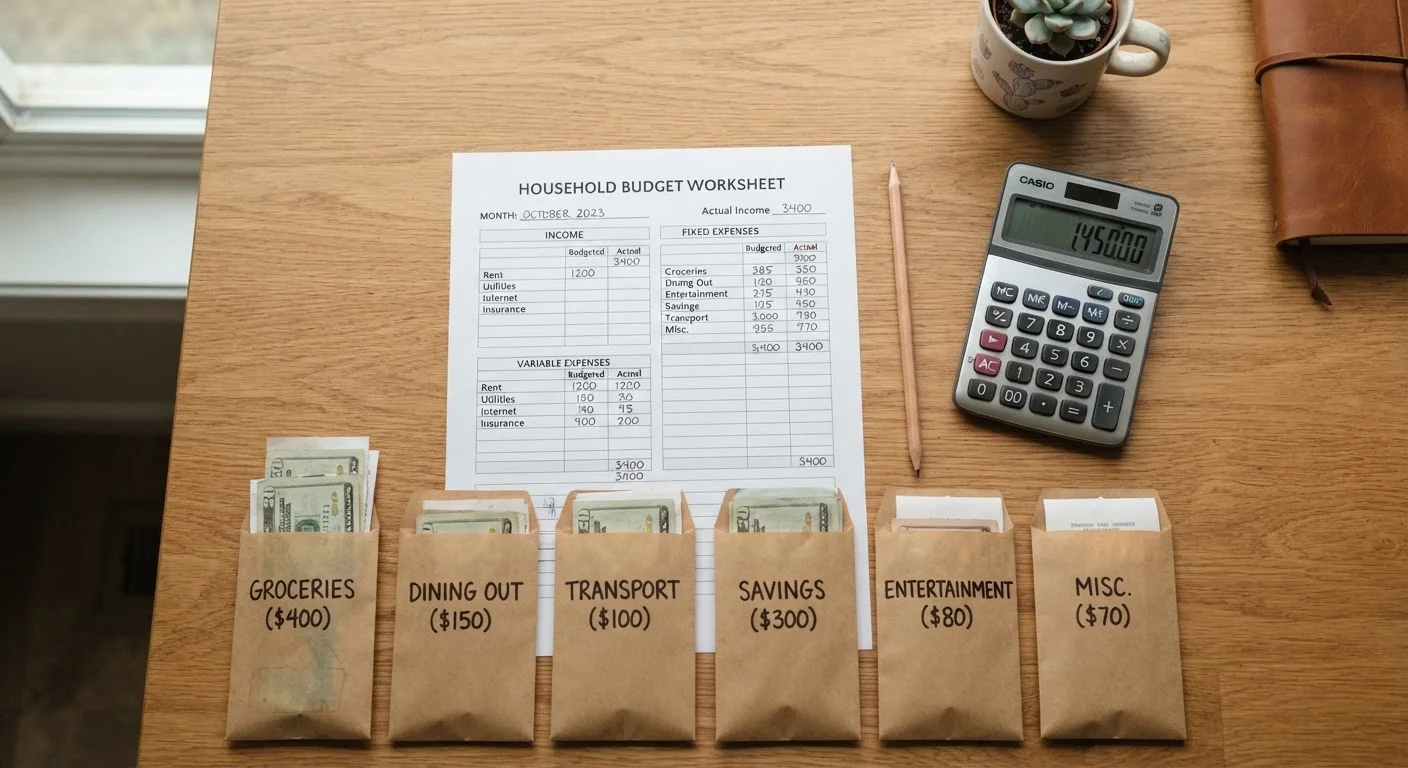
A budgeting method where every dollar of income is assigned a purpose - expenses, savings, or debt repayment - so the total adds up to zero. It promotes intentional spending.
Fixed Expense
A recurring cost that remains the same each month, such as rent or a loan payment. Fixed expenses are predictable and easy to plan for.
Variable Expense
A cost that changes month to month based on usage or behavior, such as groceries or utilities. These can often be reduced with conscious effort.
Emergency Fund
Savings set aside specifically for unexpected financial disruptions, such as job loss or a medical emergency. It acts as a financial safety net separate from regular savings.
Income and Cash Flow Terms
Before you can budget, you need to know exactly what you're working with. These terms describe where money comes from and how it moves.
| Gross vs. Net Income | Gross = before deductions; Net = take-home pay |
| Budget Foundation | Always build your budget on net (take-home) income |
| Positive Cash Flow | Income exceeds expenses for the period |
| Sinking Fund Purpose | Save gradually for known future expenses |
| Zero-Based Budget Goal | Every dollar assigned; income minus allocations = $0 |
Gross income is your total earnings before any deductions - taxes, health insurance premiums, or retirement contributions. It's the number you might see on an offer letter or quoted salary. Net income (sometimes called take-home pay) is what actually lands in your bank account after those deductions. Your budget should always be built on net income, not gross.
Cash flow refers to the movement of money in and out over a given period. Positive cash flow means more came in than went out. Negative cash flow means the opposite - and it's a signal to investigate where spending is outpacing income. Understanding your cash flow is the foundation of any honest budget. For a deeper look at how that spending breaks down, see where your money actually goes.
Spending and Expense Terms
Not all spending behaves the same way. Budgets become much easier to manage once you can tell the difference between these categories.
Fixed expenses are costs that stay the same every month - rent, a car loan payment, or a subscription with a set price. They're predictable and easy to plan around. Variable expenses change from month to month based on usage or behavior - groceries, utilities, and gas are common examples. You can influence these, even if you can't eliminate them.
Discretionary spending covers wants rather than needs: dining out, entertainment, clothing beyond the basics. It's the most flexible category and usually the first place budgeters look when they need to cut back. Non-discretionary spending covers necessities you generally can't avoid - housing, food, insurance, and minimum debt payments.
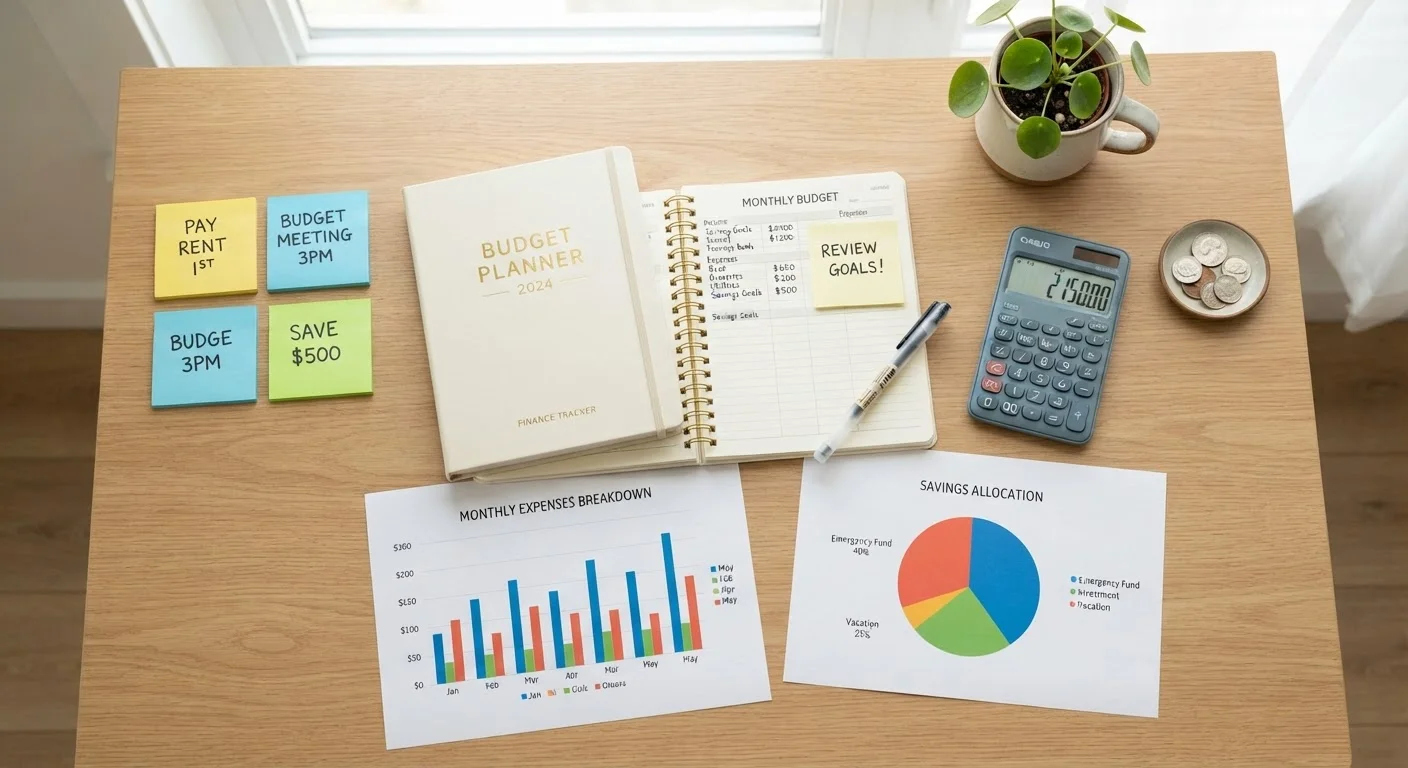
A sinking fund is money you set aside gradually for a known future expense - a car repair, a vacation, or annual insurance premiums. Instead of scrambling when the bill arrives, you've already saved for it in small, manageable increments. It's one of the most practical tools in personal budgeting, and closely connects to the goal-setting strategies covered in the Saving & Goals hub.
Sinking Funds vs. Emergency Funds
These two savings tools are often confused, but they serve different purposes. A sinking fund targets a known, planned expense - like holiday gifts or a car registration fee. An emergency fund is reserved for unexpected events you can't anticipate. Keeping them separate helps you avoid raiding your emergency savings for planned costs.
Budget Frameworks and Balance Terms
These terms describe how a budget is structured and whether it's working.
A zero-based budget means assigning every dollar of your income a specific job - savings, bills, spending - so that income minus all assignments equals zero. It doesn't mean spending everything; it means accounting for everything. A surplus occurs when your income exceeds your expenses for the period - money left over that can go toward savings or debt. A deficit is the reverse: spending exceeded income, which means you either dipped into savings or added debt.
An emergency fund is a dedicated pool of savings set aside specifically for unexpected expenses - a medical bill, job loss, or urgent home repair. Most guidance suggests keeping enough to cover several months of essential living costs, though the right amount depends on your individual circumstances. The Debt & Credit hub is a helpful companion when you're also managing obligations alongside your budget.
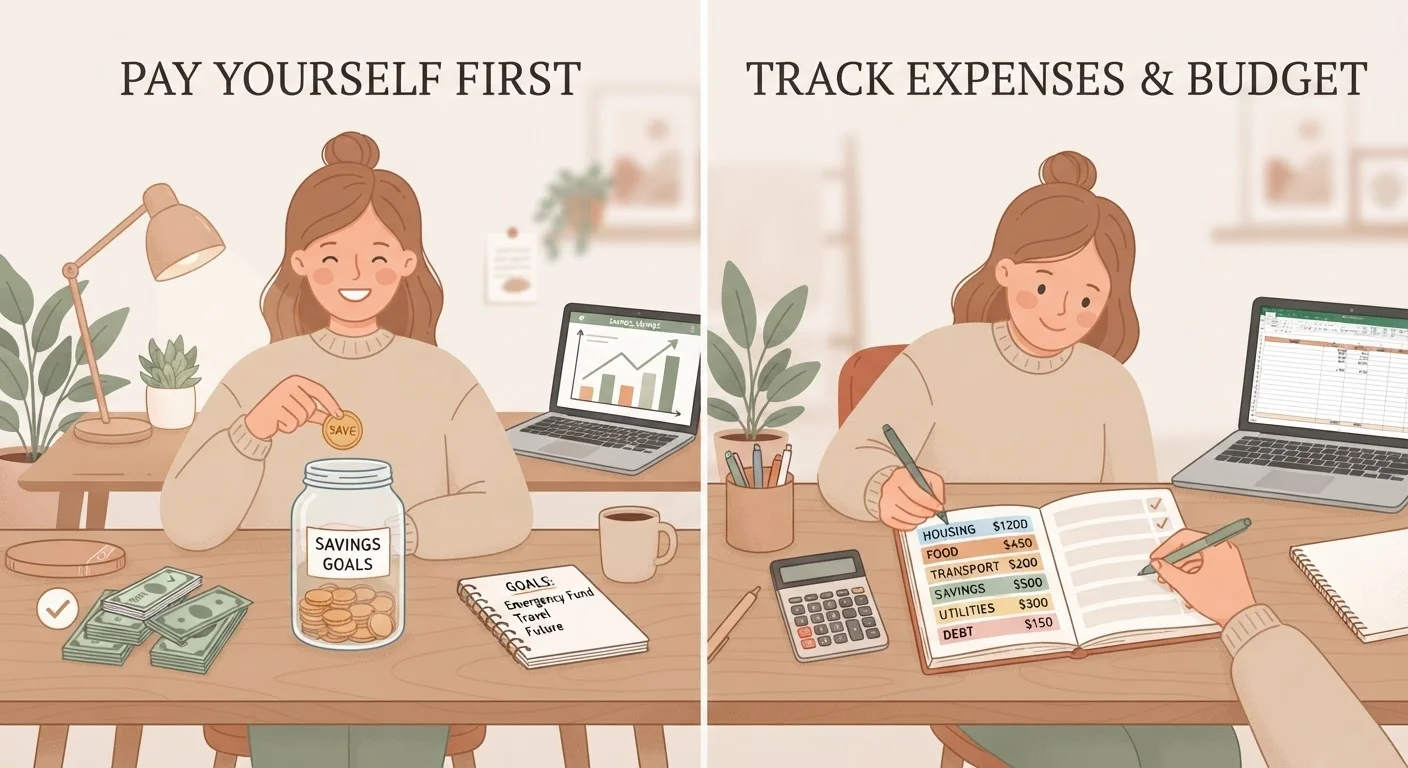
Finally, paying yourself first is a budgeting philosophy where savings contributions are treated as the first expense - moved out of your account before you spend anything else. It's contrasted with traditional budgeting, where savings happen with whatever's left over. To understand both approaches more fully, explore paying yourself first versus traditional budgeting.
This article is for general informational and educational purposes only and does not constitute personalized financial advice. Consult a qualified financial professional for guidance tailored to your individual situation.