A Sense That Never Made It Into the Textbooks
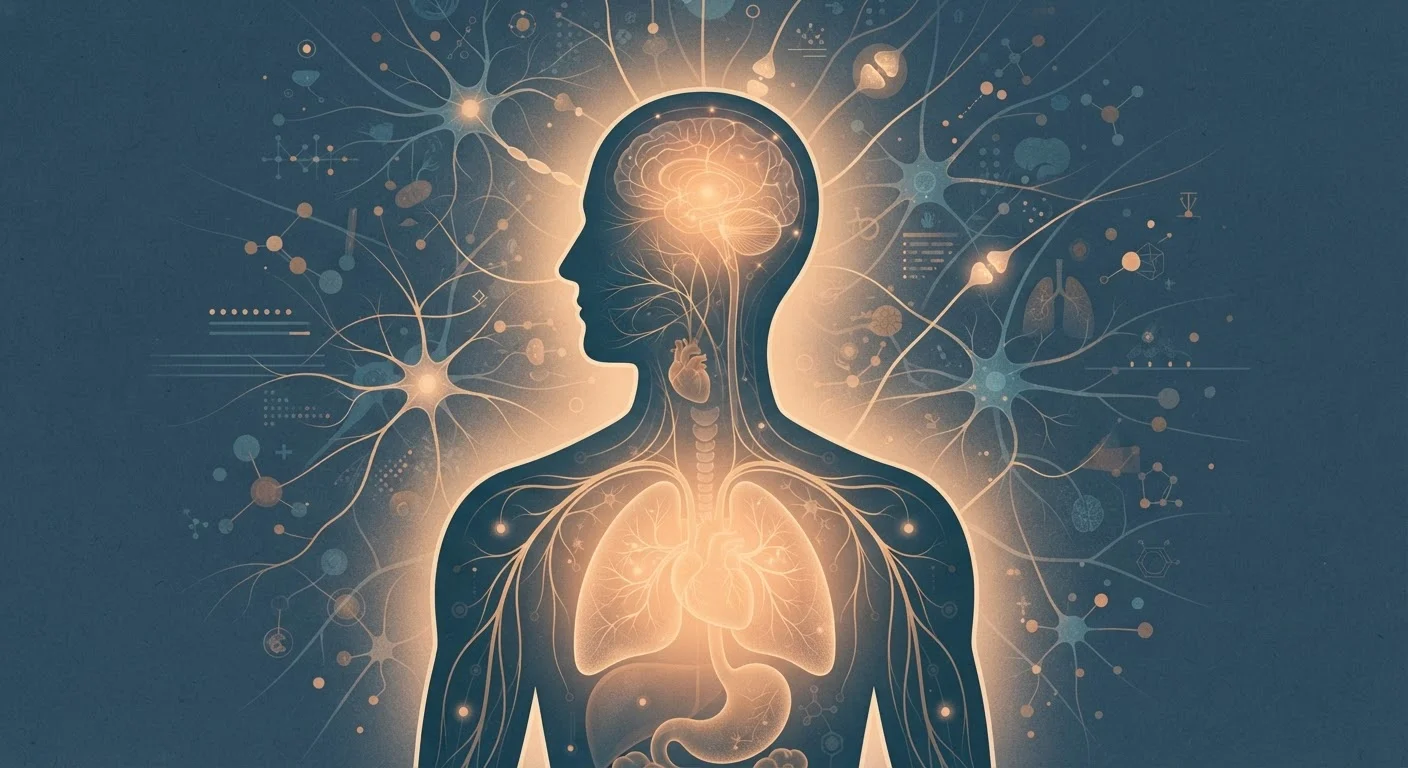
Most of us grew up learning about five senses: sight, hearing, smell, taste, and touch. What rarely got a mention is the sense that monitors everything inside you. Interoception - from the Latin for "internal perception" - is your nervous system's ongoing scan of your body's internal environment.
Every time you notice your stomach growling, feel your heart quicken before a presentation, or sense that you need water, interoception is at work. It feeds your brain a constant stream of data about your physiological condition, and your brain uses that data to keep you alive, balanced, and - in ways researchers are still mapping - emotionally regulated.
For a broader look at how the body and mind communicate, see our beginner's guide to the mind-body connection.
How Interoception Works
Specialized nerve receptors throughout your organs, muscles, skin, and cardiovascular system constantly detect internal changes - shifts in temperature, pressure, chemical composition, and more. These signals travel primarily through the vagus nerve and spinal cord to reach the brain, where regions like the insular cortex and anterior cingulate cortex interpret them.
Crucially, most of this processing happens automatically and below conscious awareness. You do not have to think about sensing your blood pressure or the movement of food through your digestive tract - your nervous system handles it continuously. What reaches your conscious mind is a translated, simplified version of those signals: the feeling of being full, the awareness of a tight chest, the sensation of fatigue.
8th Sense
How researchers commonly classify interoception
Beyond the classic five senses, interoception and proprioception are widely recognized as distinct sensory systems by neuroscientists and psychologists.
~90%
Vagus nerve signals traveling body-to-brain
Researchers estimate that roughly 80-90% of vagus nerve fibers carry information from the body to the brain, underscoring the body's role in driving brain activity.
Growing
Research publications on interoception since 2010
Academic interest in interoception has expanded substantially over the past decade, with the field drawing from neuroscience, psychiatry, and clinical psychology.
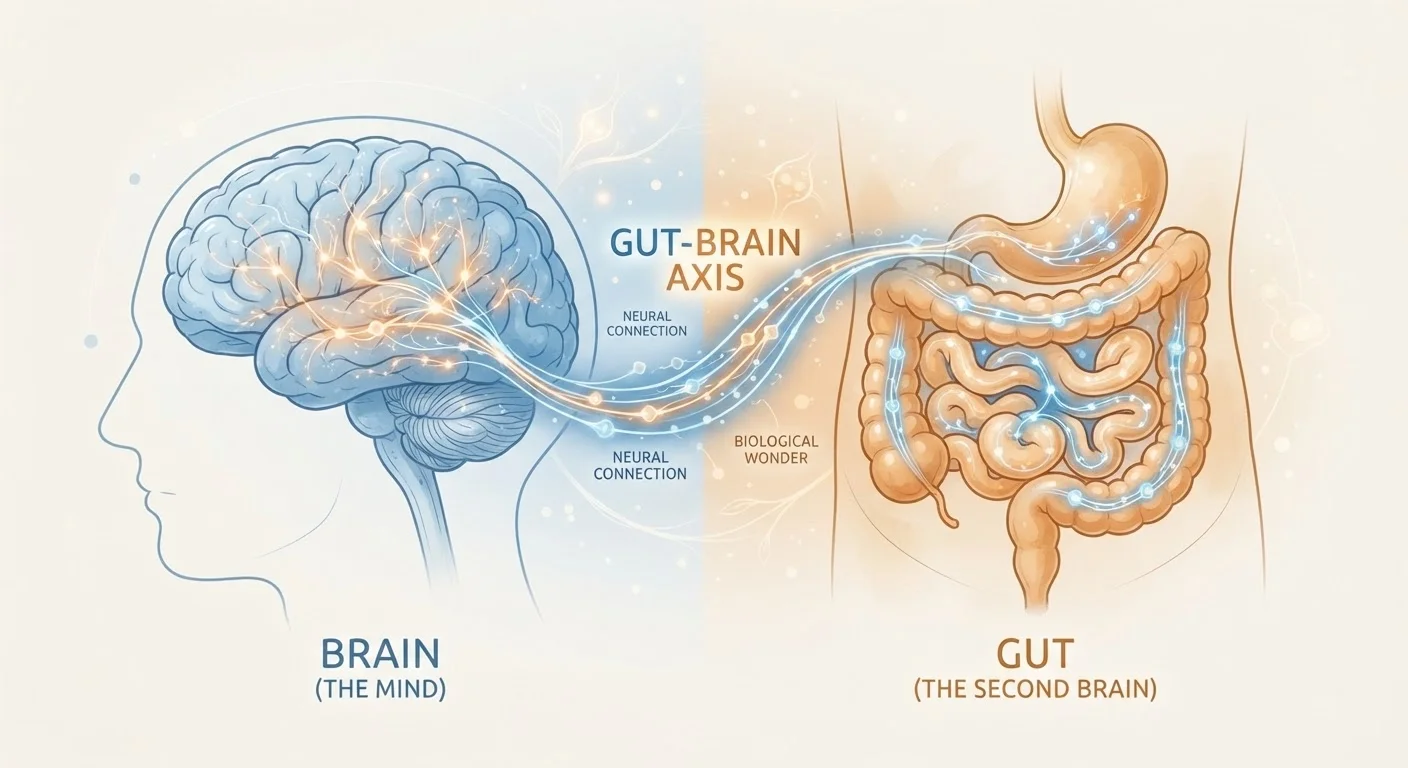
Interoception also connects closely to the gut-brain axis - the bidirectional signaling pathway between the digestive system and the brain. The gut-brain axis research helps explain why emotional states can cause physical sensations like stomach upset, and vice versa.
Why Interoception Matters for Mental and Emotional Health
Researchers increasingly view interoception as foundational to emotional experience. The neuroscientist and psychologist Lisa Feldman Barrett has proposed that emotions are, in part, your brain's interpretation of internal body states. Under this framework, what you call "anxiety" may partly reflect your brain labeling a set of interoceptive signals - elevated heart rate, shallow breathing, muscle tension - within a particular context.
“Emotions are not something that happen to you. They are something your brain constructs, in part by predicting and regulating the body's internal state.”
— Lisa Feldman Barrett, Neuroscientist and Professor of Psychology, author of research on the theory of constructed emotion
This has practical implications. People with reduced interoceptive awareness - a difficulty noticing or accurately interpreting internal signals - often report challenges identifying their own emotional states. Clinically, altered interoception has been associated with anxiety disorders, depression, eating disorders, and certain experiences in autism spectrum conditions, though the relationships are complex and not fully understood.
When internal signals are misread, misattributions are common. You might mistake thirst for hunger, physical tension for emotional dread, or fatigue for sadness. Understanding common body signal mix-ups is a useful next step if this resonates with you.
Building Interoceptive Awareness
The good news supported by emerging research is that interoceptive awareness appears to be trainable. Practices that encourage deliberate, non-judgmental attention to physical sensations are commonly studied in this context.
- Body scan meditation: Systematically moving attention through different body regions, noticing sensations without trying to change them.
- Mindful breathing: Focusing on the physical experience of each breath - the rise and fall of the chest, the sensation of air at the nostrils.
- Yoga and slow movement: Combining physical movement with attention to internal experience.
- Grounding techniques: Using sensory awareness to anchor attention in the present moment. Grounding practices draw directly on interoceptive awareness to interrupt spiraling thoughts.
These practices are not treatments for any condition. If you are experiencing persistent physical symptoms or significant emotional distress, consulting a qualified healthcare professional is always the appropriate first step.
This article is for general informational and educational purposes only and does not constitute medical or mental health advice. Always consult a qualified healthcare professional for concerns about your physical or mental well-being.