The Time Equation: It's Not Just Flight Duration
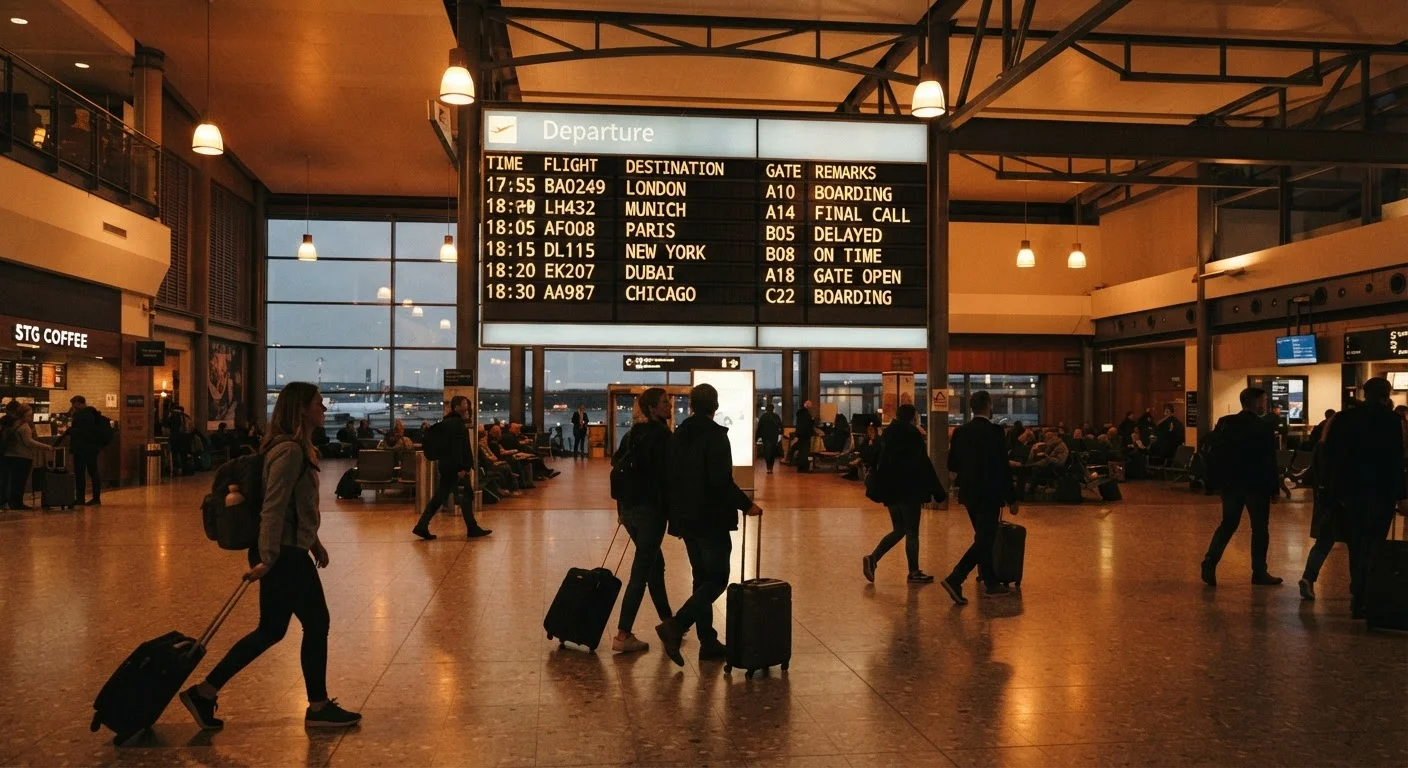
Most travelers instinctively compare scheduled flight time to scheduled train time - and flying looks like the obvious winner in most cases. But that comparison misses the bulk of the actual time cost. Factor in arriving at the airport 90 minutes before a domestic departure, clearing security, boarding, taxiing, deplaning, and then getting from the airport to your actual destination, and the margin narrows dramatically.
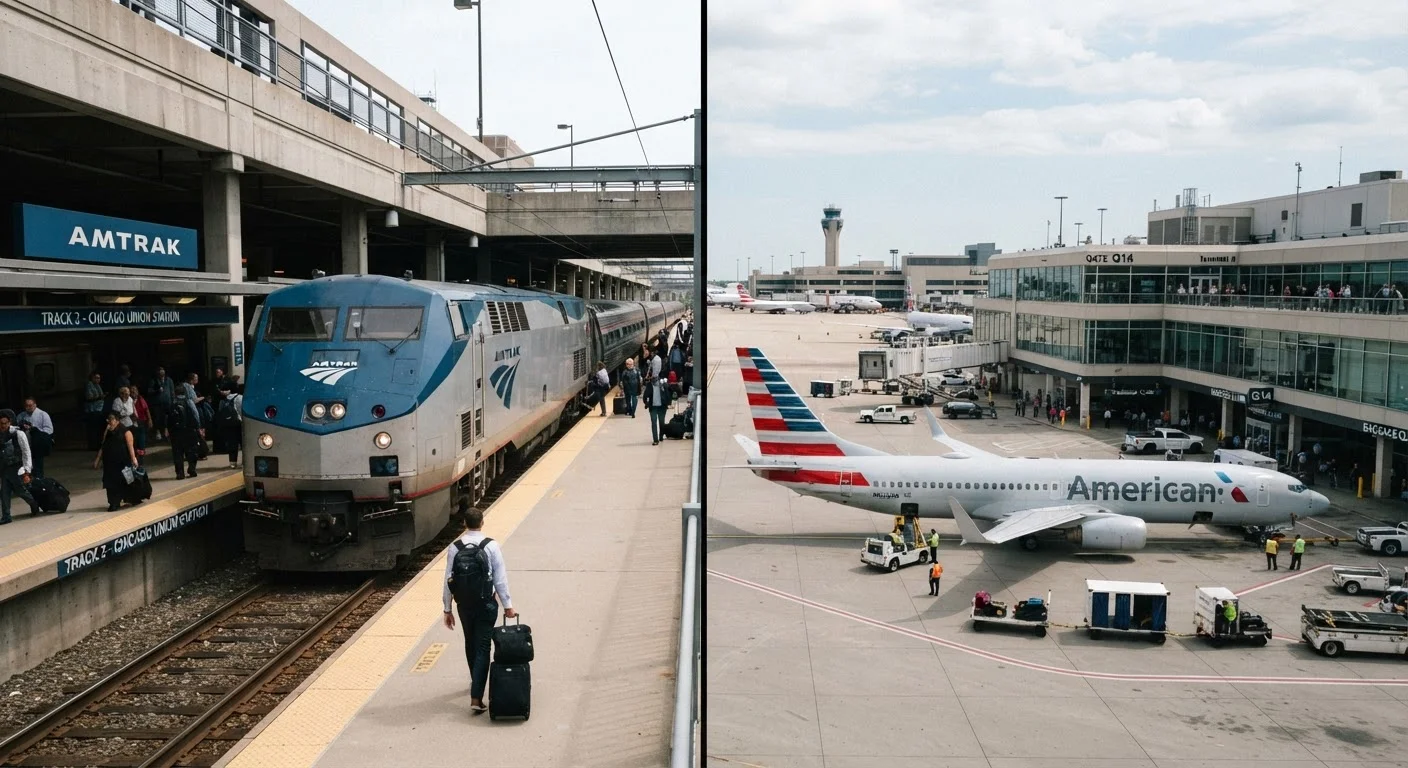
On a route like New York Penn Station to Washington Union Station, Amtrak's Acela service runs roughly 2 hours 45 minutes, station-to-station, both of which sit in the heart of each city. A shuttle flight between the same markets takes about an hour in the air - but total elapsed travel time, once airport overhead is included, often exceeds three hours. For trips under 400 miles in rail-served corridors, the door-to-door comparison frequently favors the train or comes out even.
Beyond 600 miles, the calculus shifts clearly toward flying. A train from Chicago to Los Angeles takes over 40 hours. No amount of comfort offsets that for a time-sensitive traveler. For trips where logistics compound quickly, the mode choice has downstream effects on the whole itinerary.
| Criterion | Train Travel (Amtrak) | Domestic Air Travel |
|---|---|---|
| Door-to-door speed (under 400 mi) | Competitive or faster | Often slower once overhead included |
| Door-to-door speed (over 600 mi) | Significantly slower | Clear advantage |
| Checked baggage fees | Typically free (2 bags) | $30-$40 per bag on many carriers |
| Security screening | Not required | Required; adds 30-90 min |
| Station vs. airport location | City-center stations | Often suburban airports |
| Legroom and movement | Generous; can walk freely | Tight; limited movement |
| Route availability | Limited to Amtrak network | Broad national coverage |
| On-time reliability | Variable; poor on long-distance | Variable; delays common |
| Overnight travel options | Sleeper cars available | Redeye flights only |
Cost: More Variables Than You Might Expect
Ticket price comparisons between Amtrak and airlines are notoriously difficult to generalize. Both use dynamic pricing, so fares shift constantly based on demand, booking window, and route. That said, a few structural cost differences are worth understanding.
Airlines - particularly budget carriers - can offer low base fares that look attractive until baggage fees, seat selection charges, and airport transportation costs are added. Amtrak typically includes two carry-on items and two checked bags at no additional charge on most routes, which can represent real savings for families or travelers with gear.
On longer or less-traveled rail routes, Amtrak sleeping accommodations (roomettes and bedrooms) represent a premium tier that includes meals and privacy - a different value proposition than airline first class. For overnight journeys where you'd otherwise pay for a hotel, a sleeper train ticket can shift the cost equation. That said, coach seats on long-distance trains can be significantly less comfortable than the cost implies, and delays on non-Corridor routes are common. For guidance on timing your bookings strategically, see what evidence shows about booking flights early.
~500
Amtrak destinations served nationwide
Amtrak's published network map lists approximately 500 stations across 46 states, though frequency varies widely by route.
2h 45m
Acela travel time, New York to Washington
Amtrak's Acela service connects New York Penn Station and Washington Union Station in roughly 2 hours and 45 minutes on scheduled runs.
$30-$40
Typical airline checked bag fee (per bag, each way)
Most major U.S. carriers charge fees in this range for the first checked bag in economy; budget airlines may charge more or for carry-ons as well.
Comfort, Luggage, and the Travel Experience
Train travel offers a meaningfully different physical experience than flying. Passengers can walk the length of the train, visit a dining or café car, and sit at tables wide enough to actually work. Legroom in standard coach on Amtrak generally exceeds economy seating on most domestic airlines. There are no altitude-related pressure discomforts and no restrictions on liquids in carry-ons.
The absence of a security screening process is also a practical benefit that goes beyond time savings - it removes a significant source of travel stress, particularly for families with young children, travelers with mobility limitations, or anyone carrying complex gear. Solo travelers often find train journeys particularly low-friction for exactly these reasons.
Airlines still hold advantages in onboard entertainment infrastructure and, on some routes, premium cabin offerings unavailable by rail. But for the typical domestic economy traveler, the comfort gap between a modern Amtrak coach and a domestic airline seat is real and consistently noted by frequent users of both.
For practical considerations around arrival logistics, regardless of which mode you choose, ground transportation options at major U.S. airports can meaningfully affect your total travel cost and time.
Route Coverage: Where Train Travel Simply Isn't an Option
The most significant constraint on train travel in the U.S. is network coverage. Amtrak operates roughly 500 destinations across 46 states, but many long-distance routes run only once daily - or less - in each direction. City pairs like Atlanta to Dallas, Phoenix to Denver, or Nashville to Miami have no viable direct Amtrak connection. For a large share of domestic itineraries, flying isn't just faster; it's the only practical motorized option besides driving.
The Northeast Corridor (Boston-New York-Philadelphia-Washington) is the clear exception: frequent departures, competitive travel times, and central station locations make it Amtrak's strongest market. California's Pacific Surfliner and the Cascades service in the Pacific Northwest also offer relatively frequent, useful schedules for regional trips.
Outside these corridors, long-distance trains like the California Zephyr or the Southwest Chief serve a traveler who values the journey itself - scenic routes through landscapes inaccessible by interstate - rather than pure efficiency. That's a legitimate travel choice, but a different one from the pure transit comparison. If you're still building familiarity with U.S. travel logistics broadly, the common myths about travel planning piece addresses several assumptions that affect mode choice decisions.
Travel conditions, fares, schedules, and policies change frequently. Verify current details directly with Amtrak and your airline before booking, and consult official government sources for any entry, safety, or accessibility requirements relevant to your trip.