
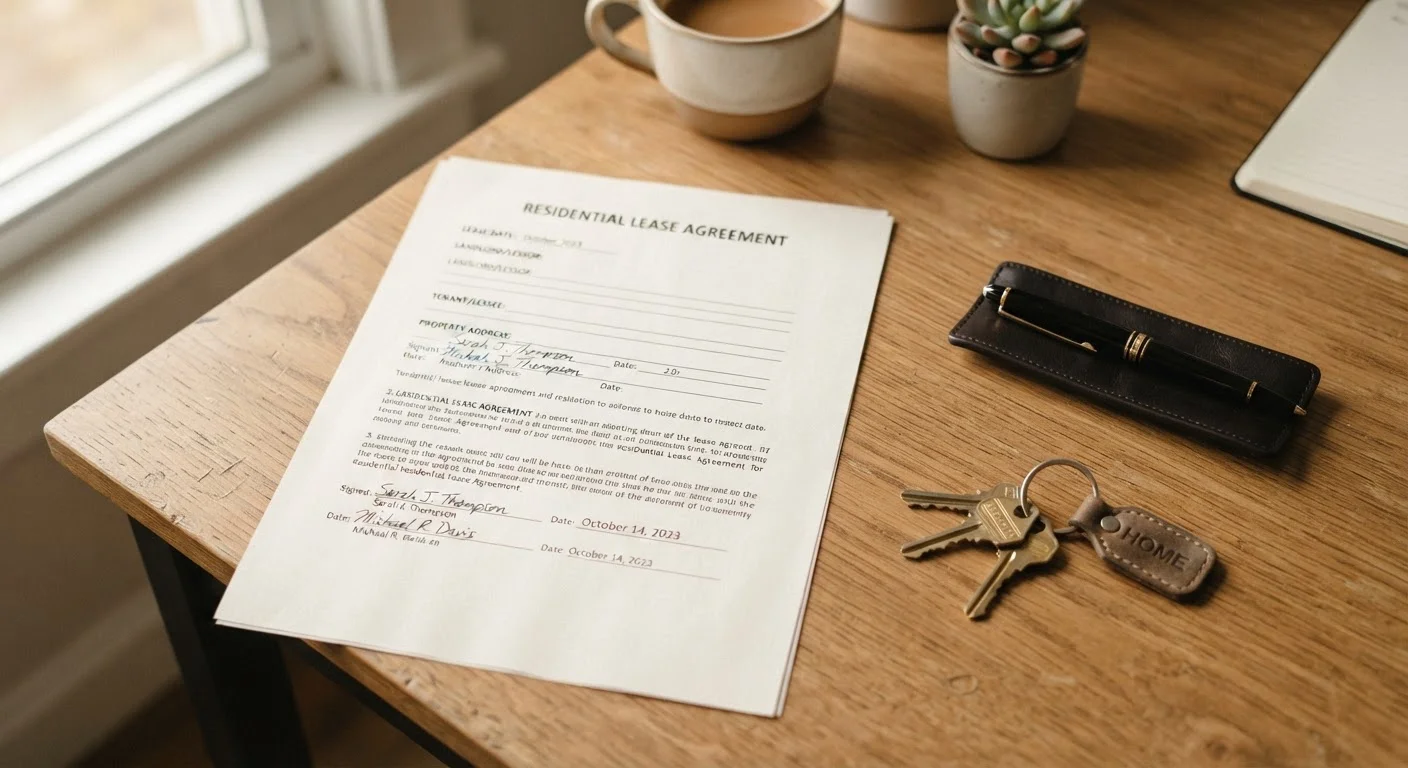
The Core Sections Every Lease Contains
Regardless of whether a lease was drafted by a property management company or a private landlord, nearly every standard residential lease includes the same foundational elements. Knowing what each section does - and what to look for - gives renters a significant advantage before committing.
Parties and property identification. The lease names the landlord (or property owner) and all tenants who will be legally bound. It also identifies the specific rental unit, including the address and any specific unit number. If someone will live in the unit but is not listed, they typically have no legal standing under the lease.
Lease term. This section defines the start and end dates of the tenancy. A fixed-term lease ends on a specific date; a month-to-month agreement continues until either party provides the required notice to terminate. Some leases automatically convert to month-to-month after the fixed term expires - a detail worth confirming before the end date approaches. For more on what happens at renewal, see how lease renewals and rent increases work.
Rent and payment terms. The lease should clearly state the monthly rent amount, the day it is due, accepted payment methods, any grace period before a late fee applies, and the amount of that fee. If any of these details are missing or vague, ask for written clarification before signing.
Security Deposits: What the Lease Should Spell Out
The security deposit section is one of the most consequential parts of any lease - and one of the most frequently disputed at move-out. State law governs how much a landlord can collect, how the funds must be held, and how quickly they must be returned after the tenancy ends.
~50%
Renters who report security deposit disputes
Industry surveys and tenant advocacy organizations consistently find that security deposit disputes are among the most common conflicts between landlords and tenants at move-out.
14-60 days
Typical state deadline to return security deposits
State laws vary considerably - some require return within 14 days of move-out, others allow up to 60 days, making it important to know your state's specific requirement.
~44M
Renter households in the United States
According to U.S. Census Bureau data, roughly 44 million households are renters, representing more than one-third of all American households.
A well-drafted lease will state the deposit amount, the conditions under which deductions can be made, the timeline for return, and any requirement that the landlord provide an itemized list of deductions. Normal wear and tear - minor scuffs, faded paint, carpet worn from regular use - is generally not a valid basis for withholding a deposit in most states. Damage beyond that, however, is.
Renters should document the unit's condition thoroughly at move-in with dated photographs or video and request a written move-in checklist signed by both parties. This documentation can be decisive if a deposit dispute arises later.
Maintenance, Repairs, and Habitability
Most leases include language about who is responsible for what maintenance. Landlords are generally required by law to maintain the unit in a habitable condition - functioning heat, plumbing, structural integrity, and freedom from significant health hazards. These obligations exist regardless of what the lease says, because they are established by state and local housing codes.
Tenants are typically responsible for keeping the unit reasonably clean, disposing of trash properly, and notifying the landlord promptly of needed repairs. Some leases attempt to shift maintenance duties - such as lawn care, pest control, or minor repairs - onto the tenant. Whether such provisions are enforceable depends on state law and how they are written.
Document Everything at Move-In
Before unpacking a single box, walk through the entire unit and photograph or video every room, noting any existing damage. Send the documentation to your landlord in writing and ask them to acknowledge it. This record can be the deciding factor in a security deposit dispute months or years later.
If a lease contains clauses that seem to limit the landlord's habitability obligations or waive the tenant's legal rights, those provisions may not be enforceable. The tenant rights most renters don't know they have include protections that exist independently of any lease language.
Clauses That Frequently Catch Renters Off Guard
Beyond the basics, leases often include provisions that renters skim past - and later regret. These commonly include:
- Subletting and assignment restrictions. Most leases prohibit subletting without written landlord approval. Violating this clause can be grounds for eviction. Anyone considering subletting or sharing a unit with someone not on the lease should understand the rules first. The gray areas around subletting and roommates are worth understanding before you act.
- Pet policies. Pet restrictions, deposits, and monthly pet fees are typically addressed in an addendum. Even a 'no pets' clause may have nuances around service animals, which are governed by federal fair housing law rather than lease terms.
- Renewal and notice requirements. Many leases require tenants to give 30 to 60 days' written notice before moving out at the end of the term. Missing this window can result in automatic renewal or financial penalties.
- Entry rights. Landlords generally must provide advance notice - commonly 24 hours - before entering the unit, except in genuine emergencies. The lease should reflect this, and state law sets the floor even if the lease is silent.
For a deeper look at provisions that create problems down the line, review common lease clauses that cause problems later before you sign.
This article provides general information about residential leases for educational purposes only. Lease enforceability and tenant rights vary by state and locality. Consult a licensed attorney or your local tenant rights organization for guidance specific to your situation.