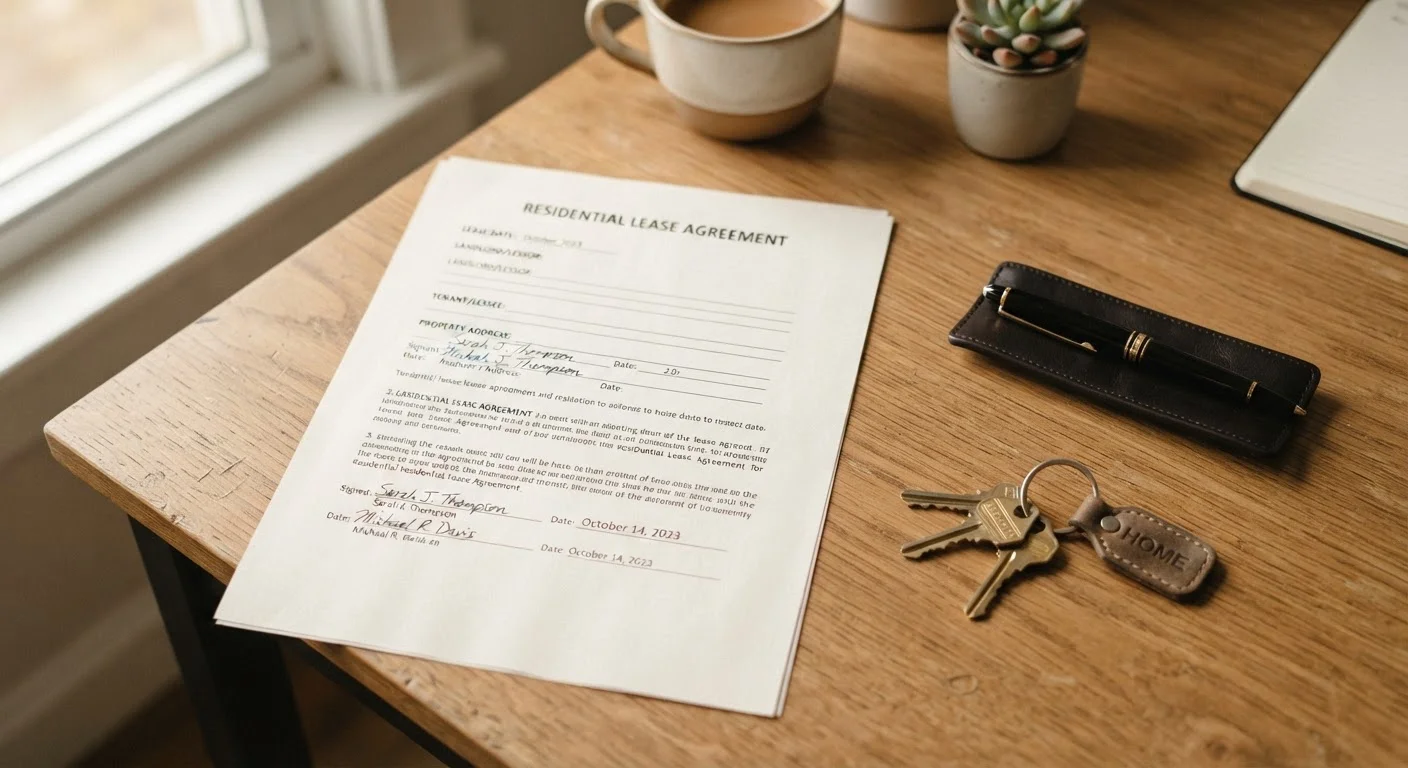

Subletting: What It Means and When It's Allowed
Subletting - also called subleasing - occurs when you rent your unit to another person while your name remains on the original lease. You become the sublandlord; the new occupant becomes your subtenant. Your legal obligation to the landlord doesn't disappear: if the subtenant damages the unit or misses rent, the landlord can still hold you accountable.
Whether subletting is permitted depends entirely on your lease and local law. Many leases prohibit subletting outright or require written landlord approval before any sublease begins. Some states and cities, however, limit a landlord's ability to withhold that approval unreasonably - particularly in high-density rental markets. Always read your lease clause carefully and check local tenant protection laws before making any arrangement. See our plain-language lease breakdown for guidance on identifying the relevant clauses.
If subletting is permitted, put the sublease agreement in writing. It should specify the rent amount, duration, which utilities are included, and each party's responsibilities. Keep copies of all communications with both your landlord and your subtenant.
Sublease
An arrangement where the original tenant rents their unit - or a portion of it - to a third party. The original tenant retains responsibility to the landlord under the primary lease.
Guarantor
A person who co-signs a lease and agrees to fulfill the tenant's financial obligations if the tenant defaults. Guarantors are legally liable even though they typically don't occupy the unit.
Joint and Several Liability
A legal concept in shared leases where each tenant can be held responsible for the entire rent or damages - not just their individual portion. Any one tenant can be pursued for the full amount owed.
Subtenant
A person who rents from a current tenant rather than directly from the property owner. The subtenant's rights and obligations are governed by the sublease, not the primary lease.
Roommate Agreement
A written document between co-tenants outlining how shared costs, responsibilities, and house rules will be managed. It supplements - but does not replace - the lease.
Co-Signers and Guarantors: What They're Agreeing To
A co-signer (often called a guarantor) is someone who signs the lease alongside you and agrees to cover rent or damages if you can't. Landlords typically request a co-signer when an applicant has insufficient credit history, limited income, or a short rental record - situations common among students, recent graduates, and people relocating from abroad.
The key fact many co-signers don't realize: their financial exposure can be substantial. Depending on the lease terms, a guarantor may be jointly and severally liable, meaning the landlord can pursue them for the full balance owed - not just a proportional share. Co-signers generally don't live in the unit and have no right of entry, yet they carry the same financial risk as a primary tenant.
Before agreeing to act as a guarantor, review the full lease terms carefully. Confirm whether the obligation is limited to a single lease term or rolls over on renewal. Some landlords use third-party guarantor services as an alternative when a personal co-signer isn't available - these typically charge a fee to the tenant.
| Primary risk for co-signers | Full financial liability for rent and damages |
| Subletting permission source | Determined by lease terms and local law |
| Roommate liability type | Often joint and several under a shared lease |
| Adding a roommate mid-lease | Typically requires written landlord approval |
| Sublease agreement format | Should always be in writing with clear terms |
Roommates and Shared Leases: Who Is Actually Responsible
When multiple people sign the same lease, each co-tenant is typically bound by joint and several liability - meaning the landlord can pursue any one of them for the full rent, regardless of internal agreements about who pays what. If your roommate stops paying their share, your landlord isn't obligated to chase them down; you may have to cover the gap to avoid eviction.
This is why written roommate agreements matter even when they aren't legally required. A roommate agreement should document how rent and utilities are split, who is responsible for which chores or shared costs, how guests are handled, and what happens if someone wants to leave early. While a roommate agreement generally isn't enforceable in the same way a lease is, it creates a clear record of expectations and can be useful if a dispute ends up in small claims court.
Adding or removing a roommate mid-lease almost always requires landlord consent. Avoid informal handshake arrangements where an unlisted occupant begins paying rent - this can create unauthorized-occupancy issues and complicate security deposit returns. For a broader look at tenant protections that apply in these situations, see our article on renter's rights most tenants overlook.
This article provides general information about common rental arrangements and is not legal advice. Lease terms and tenant-landlord laws vary by state and locality. Consult a qualified attorney or tenant advocacy organization for guidance specific to your situation.