
What Fiber Actually Is - and Isn't
Fiber is often lumped together with other carbohydrates on a nutrition label, but it behaves quite differently from sugars or starches. While most carbohydrates are broken down and absorbed into the bloodstream as glucose, fiber resists this process. Human digestive enzymes cannot break down its molecular bonds, so it travels through the stomach and small intestine largely unchanged.
This doesn't mean fiber is inert - far from it. Depending on its type, fiber interacts with water, gut bacteria, and intestinal tissue in ways that influence digestion, blood sugar response, and cholesterol metabolism. The key distinction is between soluble fiber and insoluble fiber, which differ fundamentally in how they behave once inside the digestive tract.
Understanding this distinction helps make sense of why nutrition guidelines consistently emphasize fiber from a variety of whole plant foods rather than any single source.
Soluble Fiber: What It Does and Where to Find It
Soluble fiber dissolves in water to form a thick, gel-like substance in the digestive tract. This gel slows the rate at which food leaves the stomach and the pace at which glucose enters the bloodstream - a mechanism associated with more stable blood sugar levels after meals. Soluble fiber also binds to bile acids in the intestine, which are made partly from cholesterol; when those bile acids are excreted rather than reabsorbed, the body draws on circulating cholesterol to produce more, which may contribute to lower LDL cholesterol levels over time.
Well-studied forms of soluble fiber include beta-glucan (found in oats and barley), pectin (concentrated in apples, citrus fruits, and berries), and inulin and fructooligosaccharides (present in onions, garlic, and chicory root). Legumes - including lentils, chickpeas, and kidney beans - are among the most fiber-dense foods overall and are particularly good sources of soluble fiber.
In the large intestine, some soluble fibers are fermented by gut microbiota, producing short-chain fatty acids that feed the cells lining the colon. This is an active area of research in gut health, though the full scope of these effects is still being studied. For more on how nutritional science navigates complexity, see where nutrition science gets genuinely complicated.
~5%
Adults meeting fiber intake recommendations
Research published in the American Journal of Lifestyle Medicine estimated that fewer than 10% of Americans meet daily fiber recommendations, with some analyses placing the figure as low as 5%.
25-38g
Recommended daily fiber intake for adults
The Dietary Guidelines for Americans recommend approximately 25 grams per day for women and 38 grams per day for men, based on a 2,000-2,500 calorie diet.
~15g
Average daily fiber intake in the US
National dietary survey data consistently shows average US fiber consumption falls well below recommended levels, roughly half the suggested amount for most adults.
Insoluble Fiber: Bulk, Transit, and Digestive Regularity
Insoluble fiber does not dissolve in water and remains largely intact as it moves through the digestive system. Its primary contribution is mechanical: it adds bulk to stool and speeds intestinal transit, helping prevent constipation and supporting regular bowel movements.
Common sources of insoluble fiber include wheat bran, whole grain breads and cereals, nuts and seeds, and most vegetables - particularly leafy greens, carrots, and celery. The outer skins of fruits and vegetables are often especially rich in insoluble fiber, which is one reason nutrition guidance generally favors eating whole fruits over juice.
Insoluble fiber may also play a role in gut health by stimulating peristalsis - the wave-like muscle contractions that move food through the intestines. While it is less involved in blood sugar and cholesterol pathways than soluble fiber, regular insoluble fiber intake is associated in observational research with a lower risk of certain digestive conditions, though establishing direct causation is methodologically complex.
“Dietary fiber is not a single nutrient but a family of compounds with diverse physiological effects. The distinction between soluble and insoluble fiber is clinically meaningful - each type interacts with the body in different ways, and both are needed for optimal digestive function.”
— Joanne Slavin, Professor of Food Science and Nutrition, University of Minnesota, and fiber researcher
Getting Both Types Through Everyday Food Choices
A practical reality worth noting: most whole plant foods contain both soluble and insoluble fiber, just in varying proportions. An apple, for example, provides pectin (soluble) primarily in its flesh and cellulose (insoluble) primarily in its skin. Eating a wide range of fruits, vegetables, legumes, and whole grains naturally delivers a mix of both types without needing to track each category separately.
The Dietary Guidelines for Americans suggest a daily fiber target of around 25 grams for women and 38 grams for men, though average intake in the US is considerably lower. Most people would benefit from incorporating more fiber-rich foods gradually - an abrupt large increase can cause temporary digestive discomfort, particularly gas and bloating, as the gut microbiome adapts.
Hydration matters alongside fiber intake. Because soluble fiber absorbs water and insoluble fiber relies on water to add bulk effectively, adequate fluid intake helps fiber function as intended.
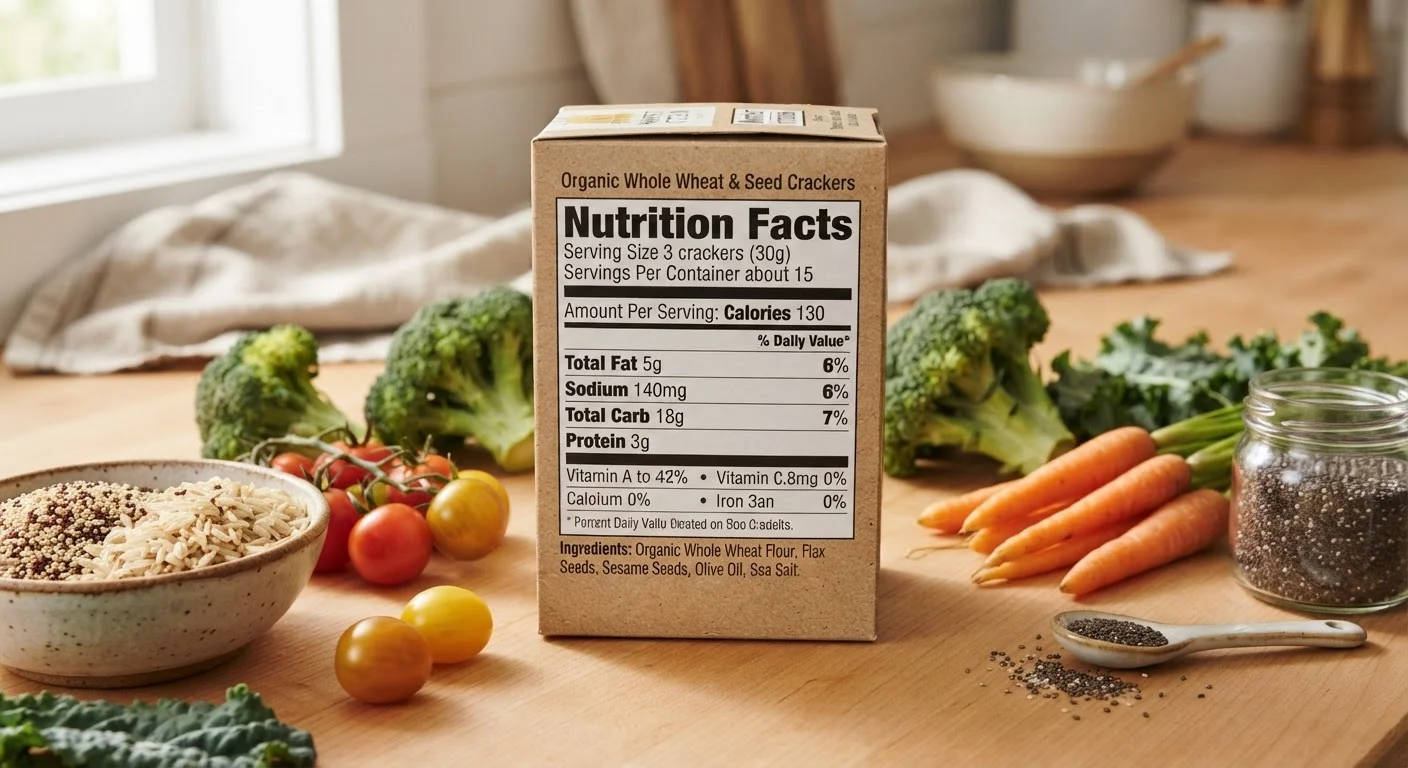
When reading food packaging, you can find total dietary fiber listed on the Nutrition Facts label. For a deeper look at how to interpret that information in context, reading a Nutrition Facts label without getting lost walks through each section in plain terms.
This article is for general informational and educational purposes only and is not a substitute for professional medical or nutritional advice. If you have a digestive condition, diabetes, or other health concern, consult a qualified healthcare provider before making significant changes to your diet.