
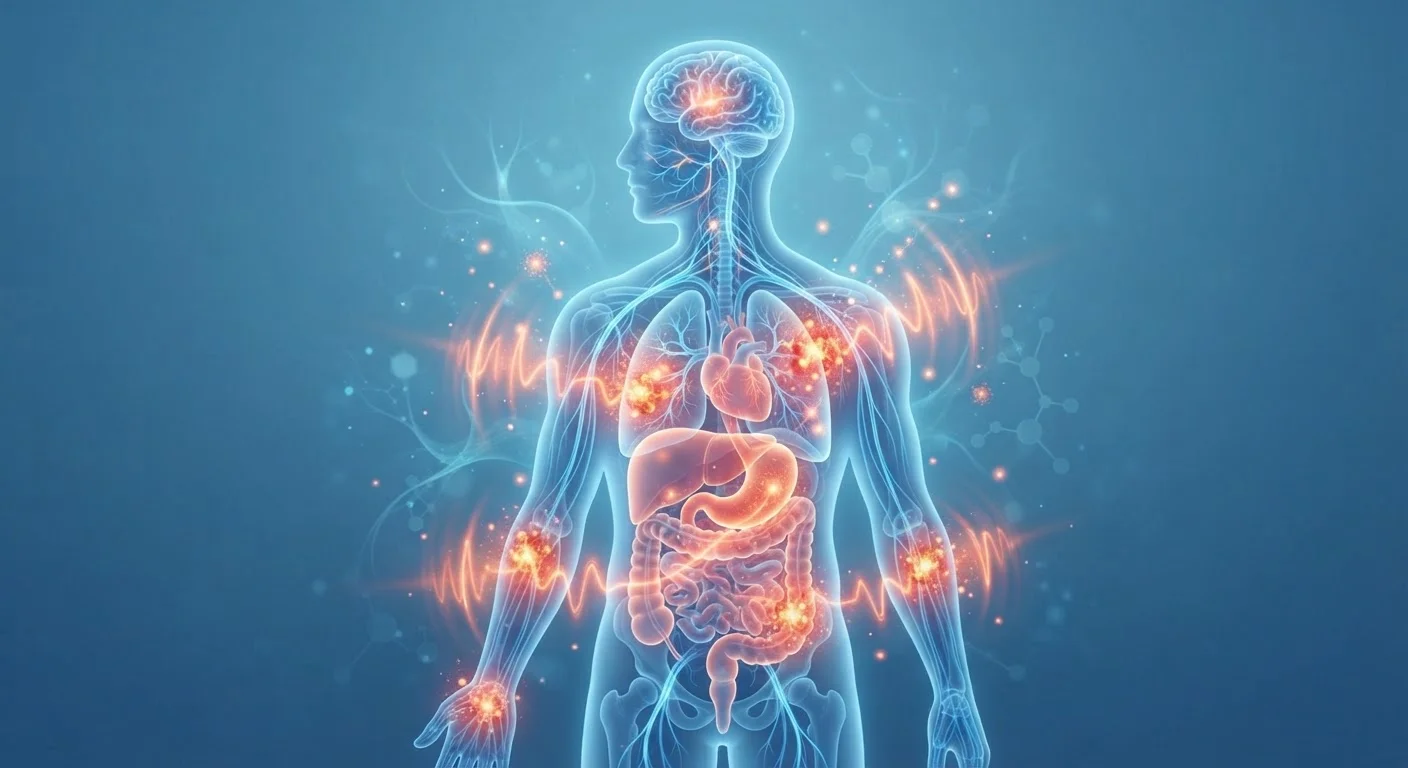
How Stress Becomes a Biological Signal
When your brain detects a stressor - whether a physical threat or a difficult email - it activates the body's alarm system. The hypothalamus signals the adrenal glands to release adrenaline and cortisol, priming your body for rapid action. This is the fight-or-flight response, and it is entirely normal and adaptive in short bursts.
Part of that threat response involves the immune system. Pro-inflammatory molecules called cytokines are released to prepare tissues for potential injury. In an acute scenario - say, a physical confrontation or brief illness - this inflammatory surge helps protect you and then subsides. The problem arises when the perceived threat never fully goes away.
For many Americans, chronic stressors like financial pressure, work demands, or relationship strain keep the alarm system partially activated for weeks or months. The body continues releasing low levels of inflammatory signals even when there is no physical wound to heal. This is sometimes described as low-grade systemic inflammation - a simmering state that lacks the dramatic signs of acute inflammation (redness, swelling) but exerts a steady pressure on tissues and organs over time. See our explanation of the nervous system's two modes to understand the biological machinery behind this response.
The Feedback Loop: When Inflammation Talks Back to the Brain
What makes the stress-inflammation relationship genuinely cyclical is that inflammatory signals don't just stay in the body - they communicate back to the brain. Cytokines can cross or influence the blood-brain barrier, altering the activity of neurotransmitters including serotonin and dopamine. Researchers studying this pathway have noted associations between elevated inflammatory markers and symptoms such as low mood, fatigue, slowed thinking, and heightened anxiety.
This creates a feedback problem: stress promotes inflammation, and that inflammation makes the stress response more sensitive and harder to dampen. One well-documented mechanism involves glucocorticoid resistance - when immune cells are chronically exposed to the stress hormone cortisol, they can become less responsive to its normal anti-inflammatory instructions. Cortisol ordinarily acts as a brake on the immune system; when that brake loses effectiveness, inflammation can persist even when the body is trying to regulate it.
“Psychological stress and inflammation are not separate systems operating in parallel - they are deeply coupled, with each capable of amplifying the other in ways that have real consequences for long-term health.”
— Sheldon Cohen, Professor of Psychology, Carnegie Mellon University, researcher in stress and immune function
The result is a loop rather than a straight line. A person under prolonged stress may find their mood and cognitive functioning affected, which itself becomes another stressor - one that continues to feed the cycle. For a broader picture of how mental and physical health interact, see our beginner's map of the mind-body connection.
Why This Matters for Long-Term Health
Low-grade chronic inflammation is considered a contributing factor in a range of serious conditions, including cardiovascular disease, type 2 diabetes, and certain autoimmune disorders, based on a substantial body of epidemiological and clinical research. While stress alone does not cause these conditions - genetics, environment, and many other factors are involved - chronically elevated inflammatory markers represent one plausible pathway by which sustained psychological stress can influence physical health over years or decades.
~30%
Adults reporting daily stress in the US
Consistent findings from Gallup and American Psychological Association surveys show roughly a third of American adults report experiencing significant stress on most days.
2-3×
Higher inflammatory marker risk with chronic loneliness
A meta-analysis published in the journal Psychosomatic Medicine found loneliness and social isolation were associated with significantly elevated inflammatory cytokine levels compared to socially connected individuals.
Up to 40%
Reduced inflammatory marker levels with regular exercise
Research published in Brain, Behavior, and Immunity indicates that regular moderate physical activity can meaningfully lower circulating levels of pro-inflammatory cytokines such as IL-6 and CRP.
It's also worth recognizing that the effects may not feel obviously inflammatory. Chronic stress doesn't always announce itself as worry or tension. Headaches, disrupted digestion, frequent infections, or persistent fatigue can all reflect the body carrying a prolonged stress load. Our article on signs your body may be carrying chronic stress explores these physical signals in more detail.
Understanding this connection isn't meant to be alarming - it's meant to be useful. Recognizing that psychological and physical health are genuinely intertwined opens the door to approaches that address both dimensions rather than treating them as separate problems.
Evidence-Informed Ways to Interrupt the Cycle
Research points to several lifestyle factors that appear to help regulate both stress reactivity and inflammatory markers. None of these are guaranteed solutions, and what works varies between individuals, but the evidence base for each is reasonably consistent:
- Sleep: Both sleep deprivation and poor sleep quality have been linked to elevated inflammatory cytokines. Supporting adequate, consistent sleep is one of the most directly impactful levers available.
- Physical activity: Regular moderate exercise has anti-inflammatory effects, partly by improving sensitivity to cortisol's regulatory signals. It also supports mood, which can reduce the psychological load feeding the cycle.
- Stress-reduction practices: Mindfulness-based approaches and breathing exercises have been studied for their effects on cortisol and inflammatory markers, with modest but consistent findings in multiple trials.
- Social connection: Loneliness and social isolation are associated with higher inflammatory markers. Meaningful social contact appears to buffer stress reactivity at a biological level.
- Diet patterns: A diet high in ultra-processed foods and refined sugars is associated with higher inflammatory markers, while diets rich in fiber, vegetables, and omega-3 fatty acids trend in the opposite direction.
For a deeper dive into which daily habits have the most evidence behind them, see our evidence-grounded look at wellness habits. And if you're evaluating your own daily routines, it's also worth reading about everyday habits that can quietly worsen stress.
This article is for general informational and educational purposes only and is not a substitute for professional medical advice, diagnosis, or treatment. If you have concerns about your health, please consult a qualified healthcare provider.