The Geography Underneath the Postcard
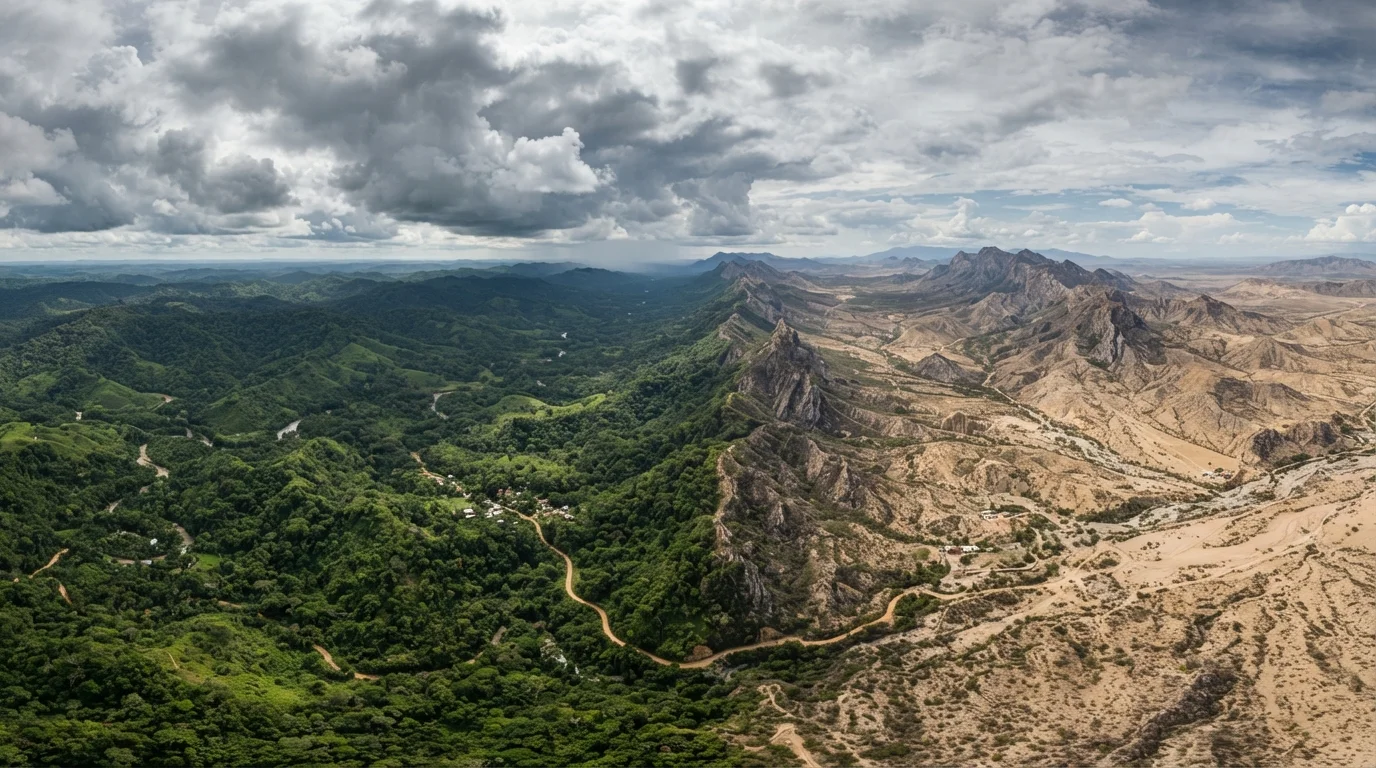
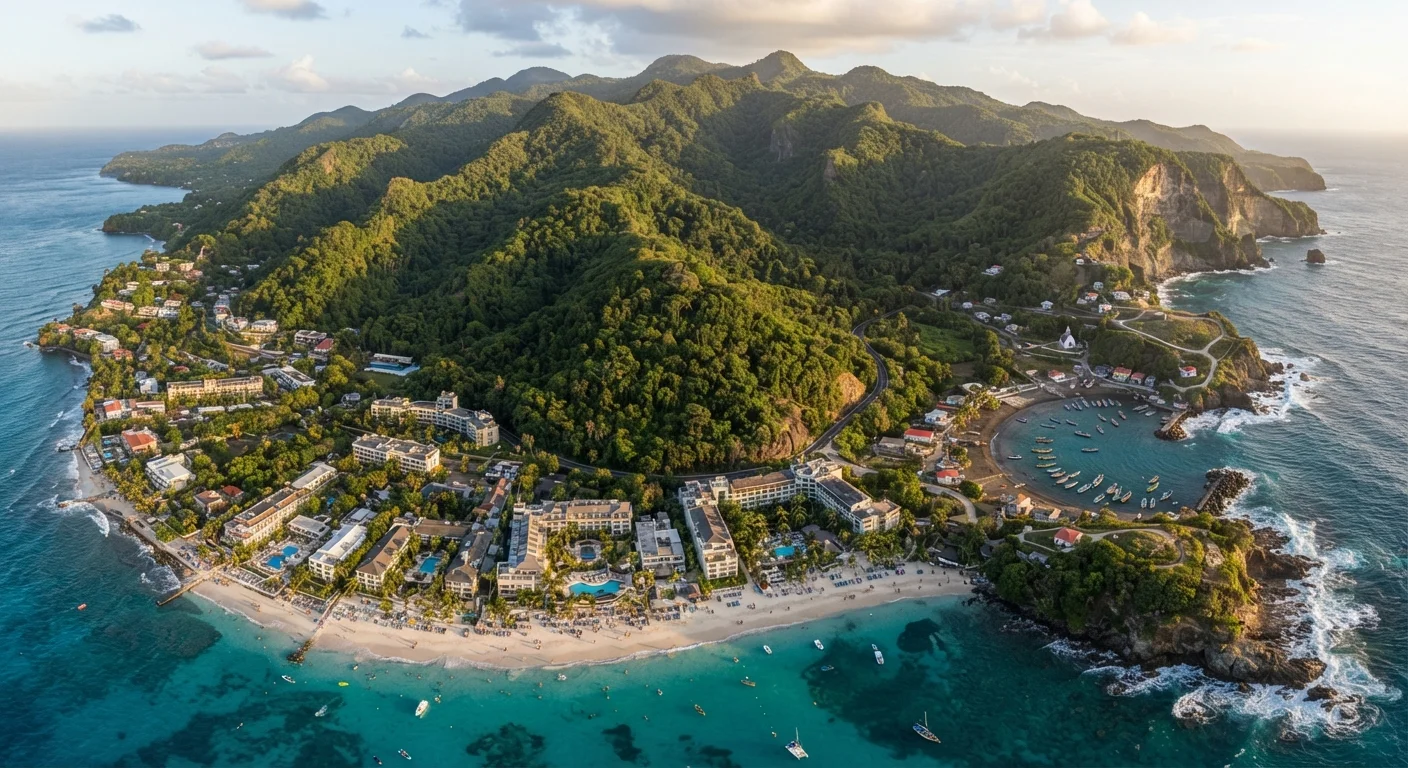
When most travelers picture a Caribbean island, they imagine a single, coherent place - turquoise water, a beach, and warm weather. In reality, islands like Jamaica, Hispaniola, Martinique, and Trinidad contain multiple distinct environments stacked within a few dozen miles. A mountainous spine, a dry leeward coast, a windward rainforest slope, and a flat agricultural interior can all coexist on the same landmass.
This geography is not a minor footnote. It directly determines what you'll experience day to day. Understanding a destination's climate before you arrive is one of the most underused steps in trip planning, yet microclimates within a single island can produce differences of 30 or more inches of annual rainfall between a leeward resort beach and a windward mountain town just 15 miles away.
30-50 in.
Annual rainfall difference across a single island
Leeward and windward coasts on the same island can differ by 30 to 50 inches of annual rainfall due to trade wind patterns and orographic lift - a core reason resort corridors cluster on drier sides.
60-90 min.
Typical transit time between island zones
Despite map distances of 20-40 miles, mountainous terrain and limited road infrastructure commonly result in 60-90 minute travel times between a resort strip and an inland or windward community.
Three Zones That Almost Every Large Caribbean Island Contains
While no two islands are identical, most larger Caribbean destinations share a recognizable internal structure.
The Resort Corridor
Usually located on a leeward (calmer, drier) coast, this strip is purpose-built for tourism. Infrastructure is polished: paved beach access, international restaurant chains, and organized excursion desks. What's often absent is the texture of local daily life - corner rum bars, open-air produce markets, and neighborhood churches. If your goal is maximum relaxation with minimal friction, this zone delivers. If you want cultural depth, it can feel like a theme park. Weighing your accommodation options in advance helps clarify whether a resort property or a guesthouse in town better matches your expectations.
The Working Town or Capital
Most islands have at least one functioning city with government buildings, local markets, street food, and residents going about ordinary life. Staying here or spending meaningful time here produces a fundamentally different impression of the island - often a more honest one. Prices at local restaurants and shops are almost always lower than in the resort zone.
The Interior or Windward Side
Cooler, greener, and often bypassed by short-stay visitors, the interior and windward coasts frequently contain the island's agricultural heartland, hiking trails, waterfalls, and rural villages. This is where you find a third, distinct version of the same destination.
Ask One Question Before You Book
Before confirming any Caribbean accommodation, search for the property's name alongside the phrase 'what's nearby' or 'how to get around' in travel forums. The answers reveal the real shape of daily life at that location - including what's missing - far more reliably than any hotel description. This single step prevents the most common zone-mismatch disappointments.
Why This Matters More Than Most Travelers Realize
The gap between expectation and experience is the most common driver of travel disappointment. A traveler who booked based on photos of a bustling local fish market may find their all-inclusive resort is 40 minutes from the nearest working town with no reliable public transit. Someone who wanted quiet seclusion may find their boutique guesthouse is in the middle of a noisy cruise-ship port neighborhood.
This dynamic echoes something that applies well beyond travel: location sub-data matters more than headline labels. Just as your ZIP code tells a more specific story than national housing trends, your hotel's specific zone tells a more accurate story than the island's general reputation.
Iconic destinations regularly surprise visitors once they arrive - and the surprise is almost always rooted in a mismatch between the general image and the specific location.
How to Research Your Zone Before Booking
The most reliable pre-booking research combines a few specific steps.
- Use satellite map view to examine the hotel's immediate surroundings - look for proximity to roads, other hotels, local buildings, and beach access points.
- Read reviews that mention logistics - specifically, what's walkable, what requires a taxi, and how much taxis cost. This reveals the practical shape of daily life at that location.
- Search the island's name plus the zone descriptor (e.g., "north coast," "leeward side," "interior") in travel forums to find discussions of the character differences.
- Check the elevation and wind exposure of the area - a coastal town at sea level on the dry side and a mountain lodge at 2,000 feet are not interchangeable, even on the same island.
For travelers comparing international versus domestic logistics, domestic vs. international trip planning diverges in ways that make this zone-level research even more important when traveling abroad, where local context is harder to verify in advance.
This article provides general travel planning information. Conditions, infrastructure, and access vary by destination and change over time. Always verify entry requirements, travel advisories, and local conditions with official government and provider sources before traveling.