Why Regional Differences Matter Before You Book
Italy is often treated as a single destination, but visiting Rome is almost nothing like visiting the Dolomites, and a week in Sicily bears little resemblance to a week in Piedmont. The country's geography - a long peninsula flanked by distinct mountain chains and surrounded by two major seas - creates regional identities that diverge in climate, culture, food, pace, and infrastructure.
Before committing to an itinerary, understanding what each region actually offers prevents the most common planning mistake: assuming Italy is internally uniform. A well-structured itinerary starts with matching regions to your travel goals, not the reverse.
20
Official regions in Italy
Italy's 20 regions each have distinct administrative, cultural, and geographic identities recognized by the Italian constitution.
~700 miles
Length of the Italian peninsula
Italy stretches approximately 700 miles from the Alpine border in the north to the southernmost tip of Calabria, creating enormous north-to-south climate variation.
5
Autonomous regions with special status
Five Italian regions - including Sicily, Sardinia, and Trentino-Alto Adige - hold special autonomous status, reflecting their distinct cultural and geographic situations.
The North: Mountains, Lakes, and Economic Centers
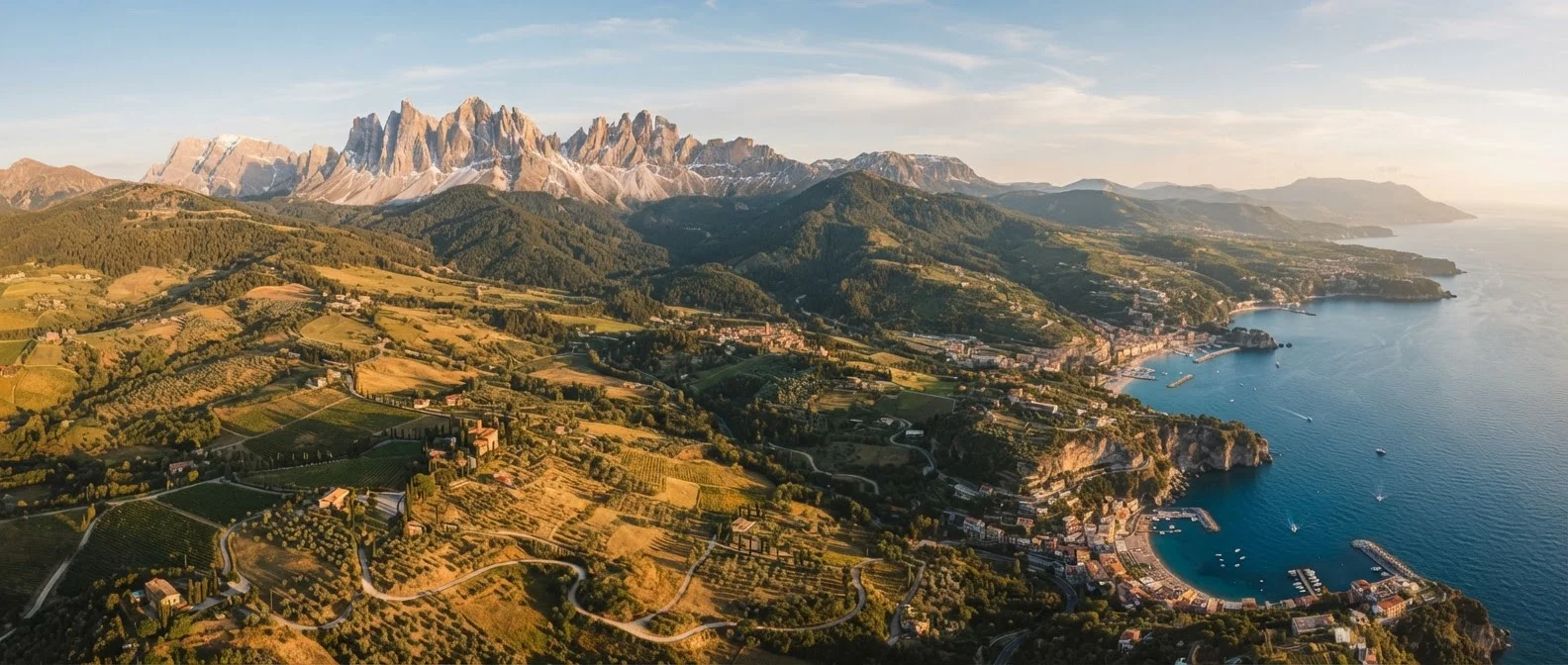
Northern Italy encompasses some of Europe's most dramatic scenery and its most efficient infrastructure. The Dolomites in Trentino-Alto Adige are a UNESCO World Heritage landscape - jagged limestone peaks that attract hikers in summer and skiers in winter. The region has a strong Germanic cultural influence, and German is widely spoken alongside Italian.
Further west, Lombardy and Piedmont offer a different register: Milan is Italy's financial and design capital; the Po Valley is flat, agricultural, and often foggy in winter. The Italian Lakes - Como, Maggiore, Garda - combine alpine backdrops with mild climates and are reliably crowded in summer. Venice and the surrounding Veneto region sit in the northeast, built across a lagoon - a geography that shapes everything from access to accommodation costs.
Northern Italy's train network is among the most reliable in the country, making multi-city trips here relatively seamless.
The Center: History, Hills, and the Classic Postcard
Tuscany is what many travelers picture when they imagine Italy: cypress-lined roads, medieval hill towns, Renaissance art in Florence, wine estates in Chianti, and the towers of San Gimignano. It delivers on those images, but it also draws Italy's heaviest tourist volumes - particularly between June and August, when prices peak and queues lengthen.
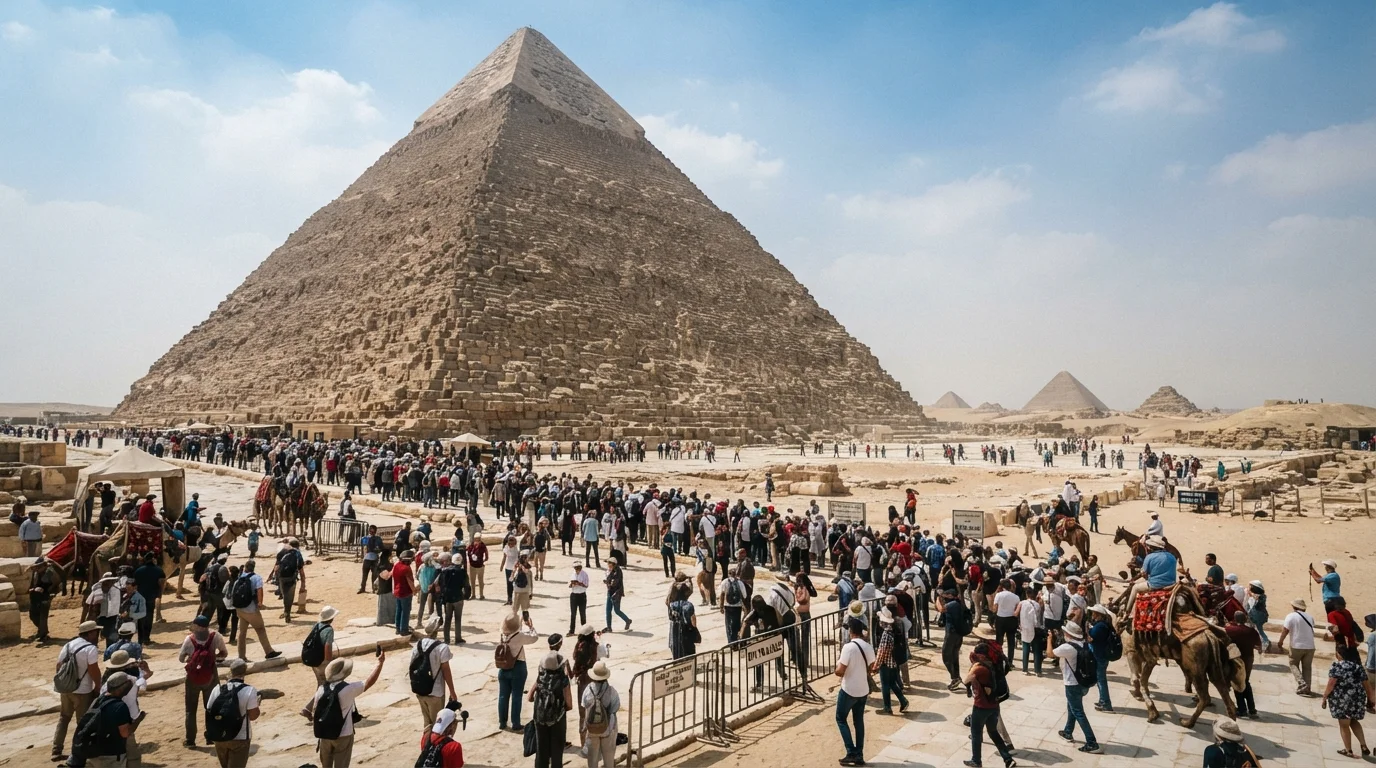
Neighboring Umbria offers similar hill-town character (Assisi, Spoleto, Orvieto) with significantly fewer crowds, often described as Tuscany without the traffic. Lazio is centered on Rome, a city so layered with history that the famous sites often land differently in person than they appear in photographs - something worth understanding before you arrive. Iconic landmarks regularly surprise visitors once they experience scale, setting, and crowds firsthand.
Central Italy's climate is broadly Mediterranean - warm, dry summers and cool winters - though altitude matters significantly in the Apennine highlands.
Avoid Tuscany in Peak Summer If You Can
June through August brings Italy's highest tourist volumes to central regions, with Florence and the Chianti countryside seeing significant price increases and queuing times. Late April through May and September through early October offer similar weather with meaningfully fewer crowds and more available accommodation at more moderate prices. Climate conditions by region are worth researching before finalizing travel dates.
The South and Islands: A Different Country Entirely
Southern Italy - Campania (Naples, Amalfi Coast, Pompeii), Puglia (Lecce, Alberobello, the Adriatic heel), Basilicata, and Calabria - operates at a different pace and presents a different Italy than the north or center. Infrastructure is patchier, driving is often the most practical way to get around, and the rewards are frequently off the heavily beaten path.
The Amalfi Coast is spectacular but narrow, congested, and logistically demanding in peak summer. Puglia has emerged as a strong alternative for travelers seeking coastal scenery, distinctive architecture, and excellent food without the same density of crowds.
Sicily and Sardinia are islands with their own distinct characters - Sicily is culturally rich, volcanically dramatic (Mount Etna), and historically layered with Greek, Arab, and Norman influences. Sardinia offers some of the Mediterranean's clearest water and a more resort-oriented experience in its northern Costa Smeralda. Both require ferry crossings or flights, adding a planning step that mainland regions don't.
Climate here is decidedly Mediterranean - summers are hot and reliably dry, winters are mild. The shoulder months of April-May and September-October are often the most comfortable times to visit. Understanding a destination's climate before you arrive can prevent significant discomfort, particularly in the south's intense summer heat.
Matching Regions to Your Travel Style
The most practical takeaway is that Italy rewards specificity. Travelers interested in Renaissance art belong in Tuscany and Lazio. Hikers and outdoor enthusiasts get more from the Dolomites or the Apennine trails than from any coastal region. Coastal and beach travelers should prioritize Puglia, Sicily, or Sardinia - and factor in that July and August bring peak heat and peak prices simultaneously.
Food-focused travelers will find that regional cuisines are genuinely distinct: Bolognese ragu in Emilia-Romagna, fresh seafood in Sicily, truffle dishes in Umbria, and pizza in Naples each reflect local agriculture and cultural history rather than a single national template.
Mixing too many regions in a single trip - a common first-timer mistake - can result in more time in transit than in destination. Choosing two or three geographically coherent regions and spending meaningful time in each almost always produces a more satisfying trip than attempting to cover the whole country at once.