Why the Season Defines Everything in Alaska
Few places on Earth are as seasonally extreme as Alaska. The same stretch of wilderness that bakes under midnight sun in July sits locked in polar darkness and sub-zero temperatures by January. This isn't just a matter of packing a heavier coat - the season determines which roads are open, which wildlife is visible, which activities are even possible, and how long each day lasts. Understanding these differences before you book is essential, not optional.
Alaska spans more than 660,000 square miles, so conditions vary significantly by region. Southeast Alaska's Inside Passage is milder and wetter year-round, while Interior Alaska and the Arctic experience the most dramatic seasonal swings. Before diving into the comparison, know which part of the state you're targeting - it matters more than most travelers expect. For a broader look at how timing reshapes travel experiences in general, see how shoulder season shifts the experience at popular destinations.
Alaska in Summer: Endless Light and Peak Activity
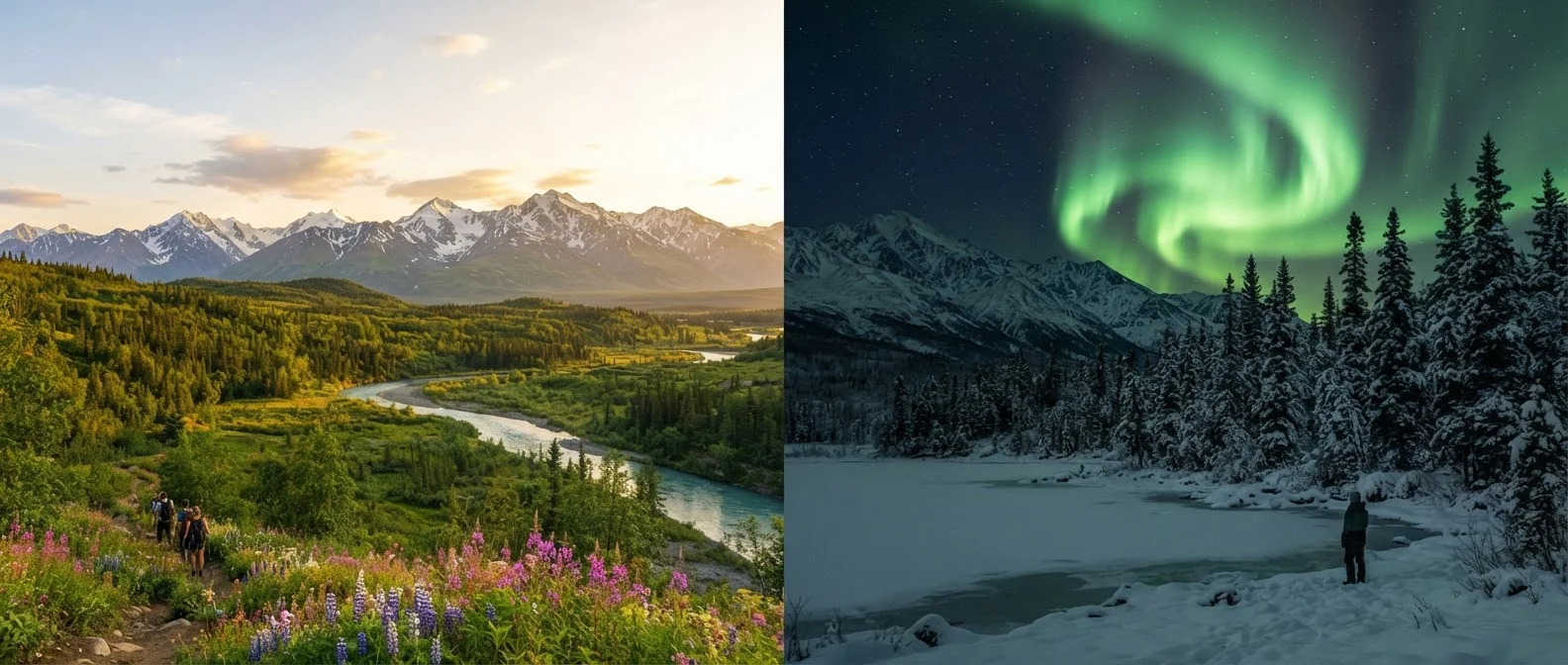
From late May through August, Alaska experiences its famous midnight sun. At the summer solstice, Fairbanks receives roughly 22 hours of daylight, and even Juneau stays light past 10 p.m. This extended daylight has a profound effect on the land: wildflowers blanket hillsides, rivers run high with snowmelt, and wildlife is active and visible across the state.
| Category | Summer (June-Aug) | Winter (Nov-Mar) | |
|---|---|---|---|
| Daylight | 18-22+ hours per day | 4-6 hours per day | |
| Average Interior Temp | 55-75°F (13-24°C) | -10 to -30°F (-23 to -34°C) | |
| Northern Lights Viewing | Not visible (too much light) | Peak season; highly reliable | |
| Wildlife Visibility | Excellent - bears, whales, birds | Limited; wolves and moose possible | |
| Road & Park Access | Most parks and roads open | Many routes closed or limited | |
| Visitor Crowds | High; popular sites busy | Low; solitude is common | |
| Typical Cost Level | High (peak demand) | Lower (off-season rates) |
What's accessible: The vast majority of Alaska's national parks, hiking trails, and scenic byways are open. Denali National Park's park road, the Kenai Fjords coastline, and Glacier Bay are all fully operational. Cruise ships serve Southeast Alaska ports from May through September, making this the primary entry point for many first-time visitors.
Wildlife: Summer is the season for brown bears fishing at Brooks Falls in Katmai, humpback whales in Frederick Sound, puffins nesting on coastal cliffs, and caribou herds moving across tundra. Moose calves appear in May. Salmon runs peak in July and August, drawing both bears and anglers in large numbers.
Trade-offs: Summer is peak season in every sense - prices for lodges, tours, and flights reflect heavy demand. Popular areas like Denali's entrance corridor can feel crowded. Mosquitoes and biting insects are significant from late June through July and should not be underestimated.
Book Wildlife Tours Well in Advance
Iconic summer experiences like bear-viewing flights into Katmai National Park or whale-watching in Southeast Alaska fill months ahead of peak season. If these are central to your trip, lock in reservations in late winter or early spring. Waiting until you arrive almost guarantees you'll miss out or pay premium walk-up rates - if spots exist at all.
Alaska in Winter: Darkness, Aurora, and a Different Kind of Wild
From November through March, Alaska belongs to a different world. Fairbanks may see just four hours of daylight in December. Temperatures in the Interior regularly drop below -20°F (-29°C), and some years push far colder. The challenges are real - but so are the rewards that only winter delivers.
Northern lights: Alaska sits directly beneath the auroral oval, making it one of the most reliable aurora-viewing locations on Earth. Fairbanks and the surrounding region are particularly well-positioned, with clear, dark skies most nights from late August through April. The peak aurora window generally falls between 10 p.m. and 2 a.m., and the displays can last for hours.
Winter activities: Dog mushing is deeply embedded in Alaskan culture, and winter is when it comes alive - from backcountry expeditions to spectator events. Ice fishing on frozen lakes, snowmobiling across vast trail networks, and cross-country skiing are all accessible to visitors with proper preparation. The Iditarod Trail Sled Dog Race begins in Anchorage each March and draws visitors to watch the ceremonial start.
Access and logistics: This is where winter travel gets complicated. Many roads, ferry routes, and small-plane services that serve remote communities operate on reduced schedules or shut down entirely. Some lodges and tour operators close for the season. Travel to winter Alaska rewards those who plan carefully and book with outfitters specifically set up for cold-weather operations.
Practical Planning: Costs, Gear, and What to Verify
Costs: Summer travel to Alaska is significantly more expensive. Peak-season lodging in popular hubs like Anchorage, Talkeetna, and Juneau can run two to three times winter rates. Budget travelers willing to embrace the logistical demands of winter may find substantially lower accommodation costs and more negotiable tour pricing.
Gear: Summer requires rain gear, insect repellent, and layers - temperatures can swing dramatically between coastal and interior regions. Winter demands a serious investment in cold-weather clothing: insulated boots rated to at least -40°F, moisture-wicking base layers, and wind-blocking outer shells. Renting cold-weather gear locally is an option in major hubs if you'd rather not purchase outright.
What to verify before you go: Entry requirements, road conditions, and park service schedules change season to season. Always confirm road access, ferry schedules, and park operational status directly with the relevant agencies before finalizing plans. Road conditions in Alaska can shift rapidly, and relying on outdated information is a common and costly mistake.
This article provides general travel information for planning purposes. Conditions, prices, access, and schedules vary and can change - always verify current details with official sources, including the Alaska Department of Transportation and the National Park Service, before traveling.