
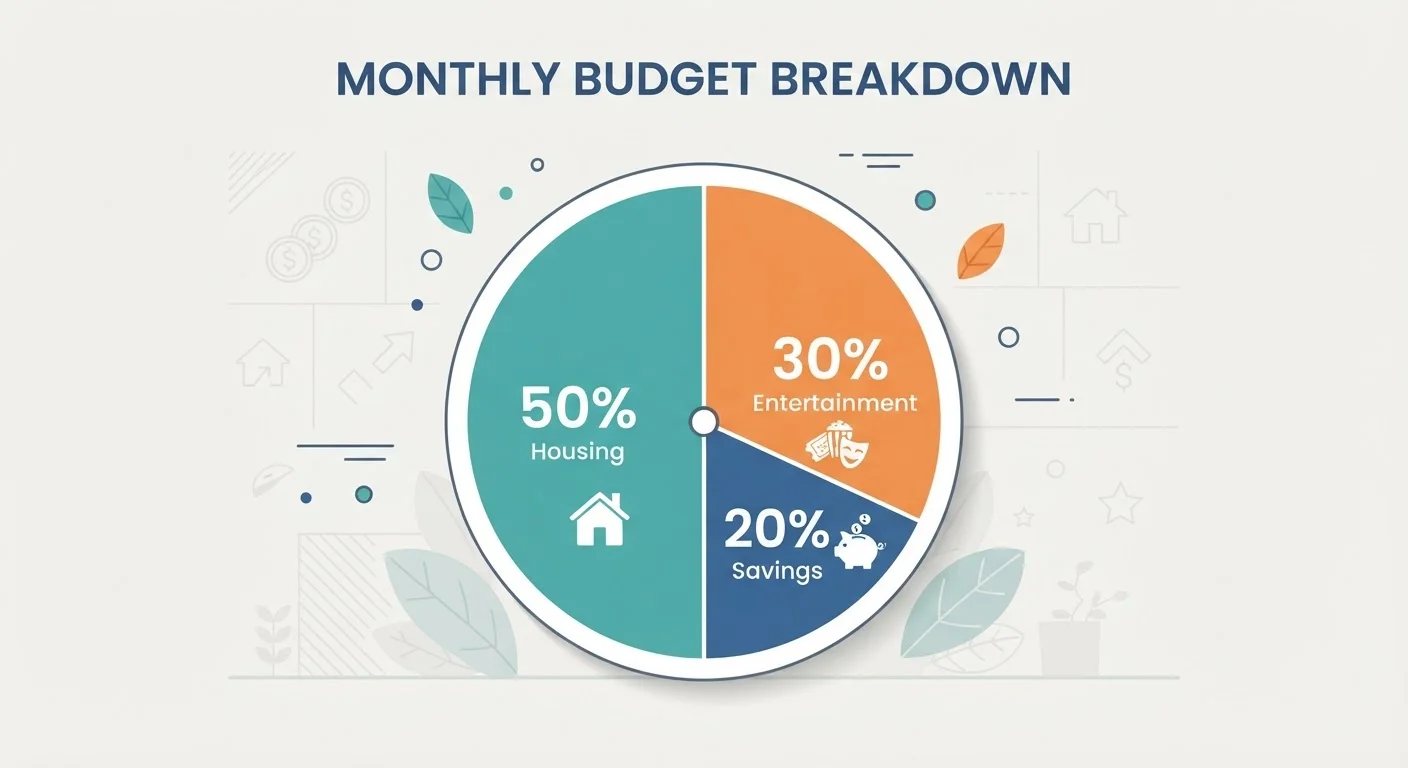
What Each Category Actually Means
Understanding the rule starts with understanding exactly what belongs in each bucket - and that distinction matters more than the percentages themselves.
50% - Needs
Needs are expenses you must pay to maintain a basic, stable life. This typically includes:
- Rent or mortgage payments
- Utilities (electricity, water, heat)
- Groceries (basic food, not restaurant meals)
- Health insurance premiums and essential medications
- Minimum payments on any loans or credit cards
- Transportation required for work
A useful test: if you stopped paying it, would something essential collapse - your housing, your health coverage, your ability to get to work? If yes, it's a need.
30% - Wants
Wants are the discretionary choices that make life enjoyable but aren't strictly necessary. Streaming services, dining out, gym memberships, hobbies, travel, and clothing beyond the basics all fit here. The line between needs and wants can feel blurry - a car may be a need, but an upgraded trim level is a want. Being honest about this distinction is important. Our article on auditing your spending habits can help you draw those lines clearly.
20% - Savings and Debt Repayment
This bucket covers your financial future. It includes contributions to an emergency fund, retirement accounts like a 401(k) or IRA, other savings goals, and any debt payments above the required minimums. For more on building savings targets, the Saving & Goals hub is a useful next step.
How to Apply It to Your Own Income
Applying the rule is straightforward once you have your take-home pay figured out. Here's how to work through it:
- Find your monthly after-tax income. Add up all sources - wages, freelance income, side work - after taxes are removed.
- Calculate your three targets. Multiply that figure by 0.50, 0.30, and 0.20 to get your spending limits for each category.
- Compare against your actual spending. Review one to three months of bank and credit card statements and sort expenses into needs, wants, and savings. This is where most people discover surprises.
- Identify gaps and adjust. If your needs routinely exceed 50%, look for places to reduce - a lower-cost phone plan, refinancing a loan, or renegotiating subscriptions.
50%
Recommended share of income for essential needs
The 50/30/20 framework allocates half of take-home pay to unavoidable fixed and variable expenses like housing, food, and insurance.
~36%
Average U.S. household share spent on housing
According to the U.S. Bureau of Labor Statistics Consumer Expenditure Survey, housing alone averages roughly a third of household spending - leaving little room for other needs in the 50% bucket.
20%
Target share for savings and debt payoff
Financial educators widely consider saving at least 20% of take-home income a meaningful benchmark for building long-term security, though individual circumstances vary.
If you've never built a budget before, our guide on creating your first personal budget walks through the foundational steps before you apply any framework like this one.
This article provides general financial education and is not personalized financial advice. Consider consulting a licensed financial professional for guidance tailored to your circumstances.
When the Rule Works - and When to Adjust It
The 50/30/20 rule is popular because it's simple and flexible, but it isn't a perfect fit for every household.
When it works well
- You have a stable monthly income and predictable expenses
- You're new to budgeting and want a quick, low-friction framework to start with
- Your needs are comfortably below half your take-home pay
- You want structure without micro-managing every purchase
When you may need to adjust
- High cost-of-living areas: In many major cities, rent alone can push needs past 50%. Adjusting to 60/20/20 or another split while working toward lower housing costs is reasonable.
- Aggressive debt payoff goals: Shifting money from wants to savings/debt - even temporarily - can accelerate your progress significantly.
- Variable income: Freelancers and gig workers may do better budgeting off a conservative income floor rather than a fixed monthly number.
- Shared households: When multiple incomes are combined, the math changes. The guide to budgeting as a couple or household addresses how to adapt percentage-based approaches for shared finances.
Whichever split you use, reviewing it regularly keeps it useful. A monthly budget review helps you catch drift before it becomes a problem.