Why 'Healthy' Is a Slippery Word
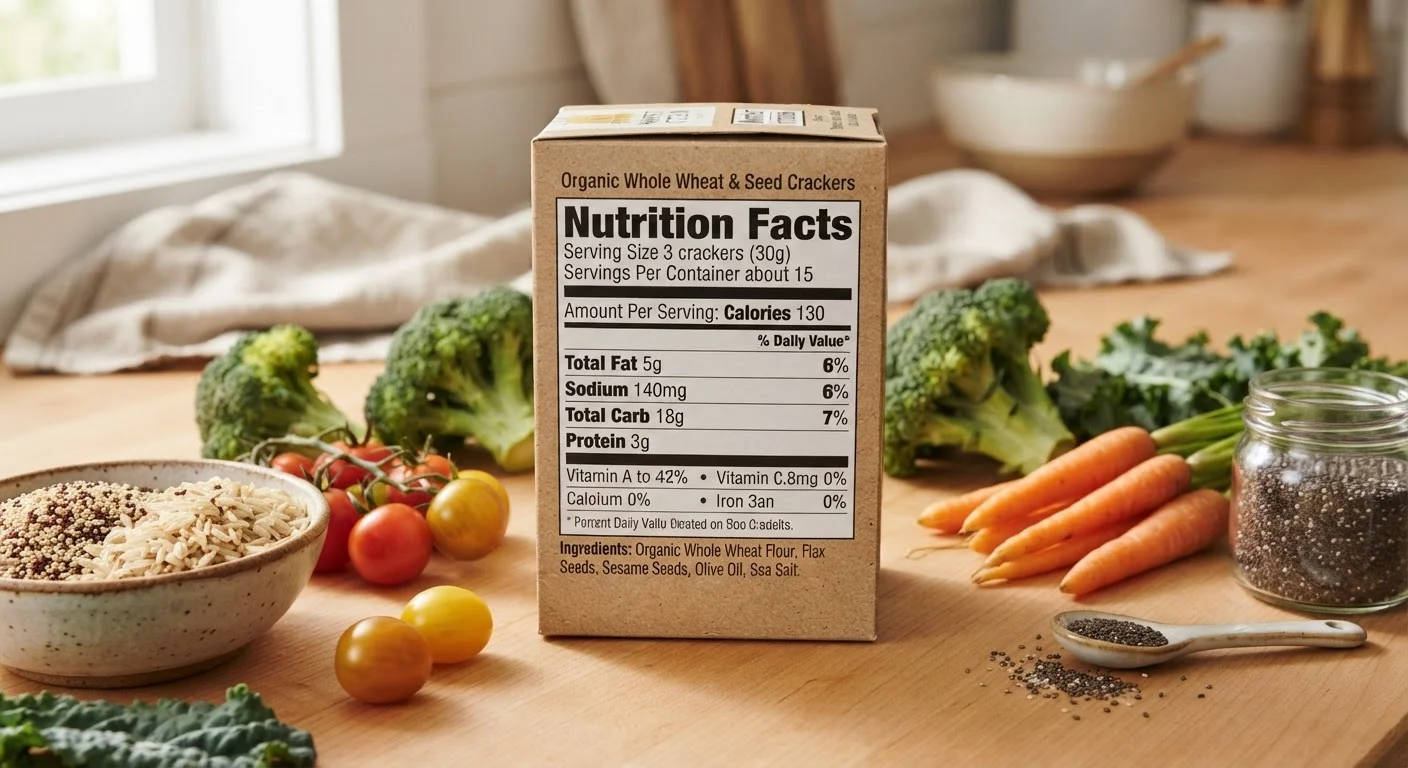
Walk through any grocery store and you'll see the word healthy on dozens of packages - crackers, juices, cereals, protein bars. It feels reassuring. But what does it actually tell you?
In the United States, the FDA has not historically enforced a precise, comprehensive definition of the term on food packaging. The agency has proposed updated guidance in recent years, but the word still appears on products in ways that don't consistently reflect their nutritional profile. A food can carry the label while being high in added sugars, low in fiber, or nutritionally thin in other ways.
This isn't a minor technicality. When a term used to guide food decisions lacks a reliable, uniform meaning, it shifts the burden onto consumers to look past the label. That's where a clearer concept - nutrient density - becomes genuinely useful.
Why 'Healthy' Labeling Is Still Evolving
The FDA's definition of 'healthy' as a food label claim has been under review and revision for years. In 2024, the agency issued a proposed rule that would update which foods qualify to use the term, tying it more closely to current dietary guidance. Until a final rule takes effect and is widely enforced, the term on packaging remains inconsistently applied. Checking the Nutrition Facts label directly is a more reliable approach than relying on front-of-package claims.
What Nutrient Density Actually Measures
Nutrient density is a way of evaluating foods based on the concentration of beneficial nutrients they deliver per calorie. The more vitamins, minerals, fiber, protein, and other health-supporting compounds a food provides relative to its calorie count, the more nutrient-dense it is.
This framing helps reframe common misunderstandings. Calories alone are not the enemy, and low-calorie foods are not automatically virtuous. A can of diet soda has almost no calories - but it also has almost no nutrients. A handful of almonds has a meaningful calorie count but also delivers magnesium, vitamin E, healthy fats, fiber, and protein. By a nutrient density standard, the almonds are far more valuable.
Similarly, a plain white rice dish and a bowl of lentils may have similar calorie counts, but lentils deliver substantially more fiber, iron, folate, and plant-based protein. Nutrient density surfaces that difference in a way that a simple calorie count does not.
~13%
US adults meeting vegetable intake guidelines
According to CDC data, only about 1 in 10 Americans meets federal recommendations for daily vegetable consumption - foods that consistently rank among the most nutrient-dense options available.
57%
of US calories from ultra-processed foods
Research published in BMJ Open estimated that ultra-processed foods account for more than half of caloric intake in the US diet - categories that tend to be low in nutrient density relative to calorie content.
~90%
of Americans under-consuming key nutrients
USDA Dietary Guidelines analyses have consistently found that most Americans fall short of recommended intakes for fiber, calcium, potassium, and vitamin D - nutrients commonly found in high-density whole foods.
Applying Nutrient Density to Real Eating
One of the strengths of nutrient density as a concept is that it doesn't require you to follow a rigid diet or eliminate entire food groups. It's a lens, not a rulebook.
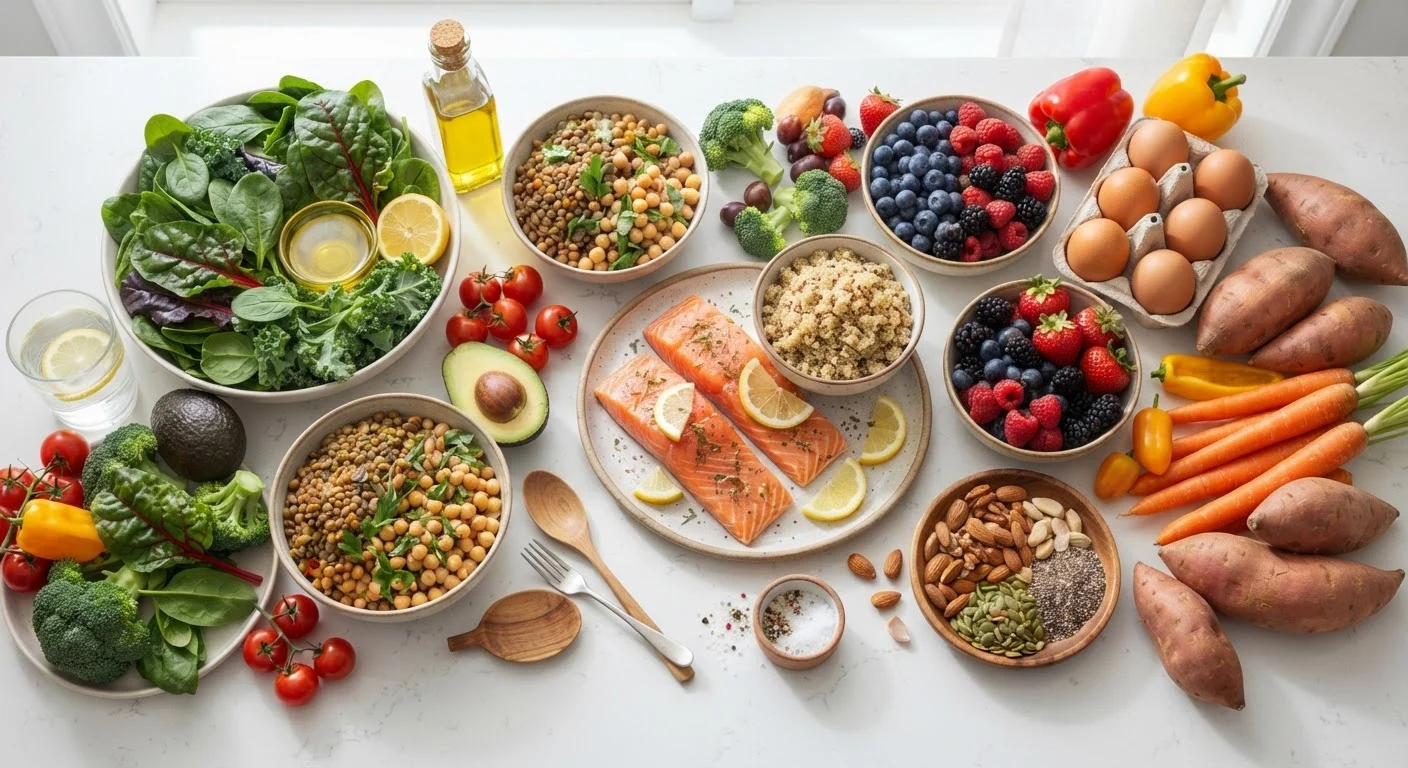
In practice, thinking about nutrient density means asking: What is this food actually providing? Dark leafy greens like spinach or kale, legumes like lentils and black beans, eggs, fatty fish like salmon, whole grains, berries, and nuts consistently rank high on nutrient density measures. These foods tend to show up in well-studied dietary patterns - a point worth noting for anyone curious about the eating patterns nutrition research has studied most.
The concept also applies at the level of an overall eating pattern rather than individual meals. No single food has to be nutritionally perfect. What matters is whether, across a day or week of eating, you're consistently getting a broad range of nutrients. This is a point where nutrition science gets genuinely complicated - individual foods are difficult to study in isolation, and patterns matter more than any single item.
For practical help comparing foods, learning to read a Nutrition Facts label is a valuable skill. The % Daily Value column, in particular, can help you see at a glance how much of key nutrients a food provides. Our companion article on reading a Nutrition Facts label without getting lost offers a thorough walkthrough.
A More Honest Framework for Food Decisions
Nutrient density isn't a perfect tool. It doesn't capture everything - bioavailability (how well your body absorbs nutrients from a given food), food preparation methods, and individual health factors all affect nutritional outcomes in ways a simple density score won't reflect. For a fuller picture of why nutrition claims can be harder to evaluate than they appear, it helps to understand where nutrition science gets genuinely complicated.
Still, compared to a loosely defined marketing term like 'healthy,' nutrient density gives consumers something more concrete to work with. It encourages looking at what a food actually contains rather than what its packaging claims. And it fits naturally into an approach to eating that emphasizes variety, whole foods, and gradual habit-building - the kind of small, evidence-backed nutrition habits that tend to hold up over time.
This is general nutrition education intended to help you make more informed choices - not personalized dietary advice. If you have specific health concerns or conditions, consult a qualified healthcare provider or registered dietitian before making significant changes to what you eat.
This article is for informational purposes only and does not constitute medical or dietary advice. Always consult a qualified healthcare professional for guidance specific to your health needs.