Water Is a Nutrient, Not Just a Beverage
Most nutrition conversations focus on macronutrients - carbohydrates, proteins, and fats - or micronutrients like vitamins and minerals. Water rarely gets discussed in the same breath, yet it functions as an essential nutrient in its own right. The body uses water in virtually every physiological process: transporting nutrients through the bloodstream, regulating temperature, enabling cellular reactions, and flushing metabolic waste through the kidneys.
Unlike macronutrients, water provides no calories, but its absence disrupts nearly every system that processes the food you do eat. Without adequate hydration, nutrient transport slows, enzymatic activity is compromised, and the gut environment shifts in ways that can reduce absorption efficiency. This positions hydration not as a separate lifestyle concern but as a core component of nutritional health.
For a broader look at how the body uses vitamins and minerals that depend on water as a transport medium, see our guide to micronutrients.
~20%
Daily water intake from food (typical diet)
The National Academies of Sciences, Engineering, and Medicine estimates that roughly 20% of total daily water intake for most people comes from food rather than beverages.
>90%
Water content of high-moisture vegetables
Foods like cucumbers, lettuce, and celery are more than 90% water by weight, making produce-rich diets a meaningful contributor to overall hydration.
3.7 L / 2.7 L
Total daily water adequate intake (men / women)
The National Academies set total adequate intake - from all food and beverages combined - at approximately 3.7 liters for men and 2.7 liters for women, with individual needs varying widely.
How Food Contributes to Your Daily Fluid Intake
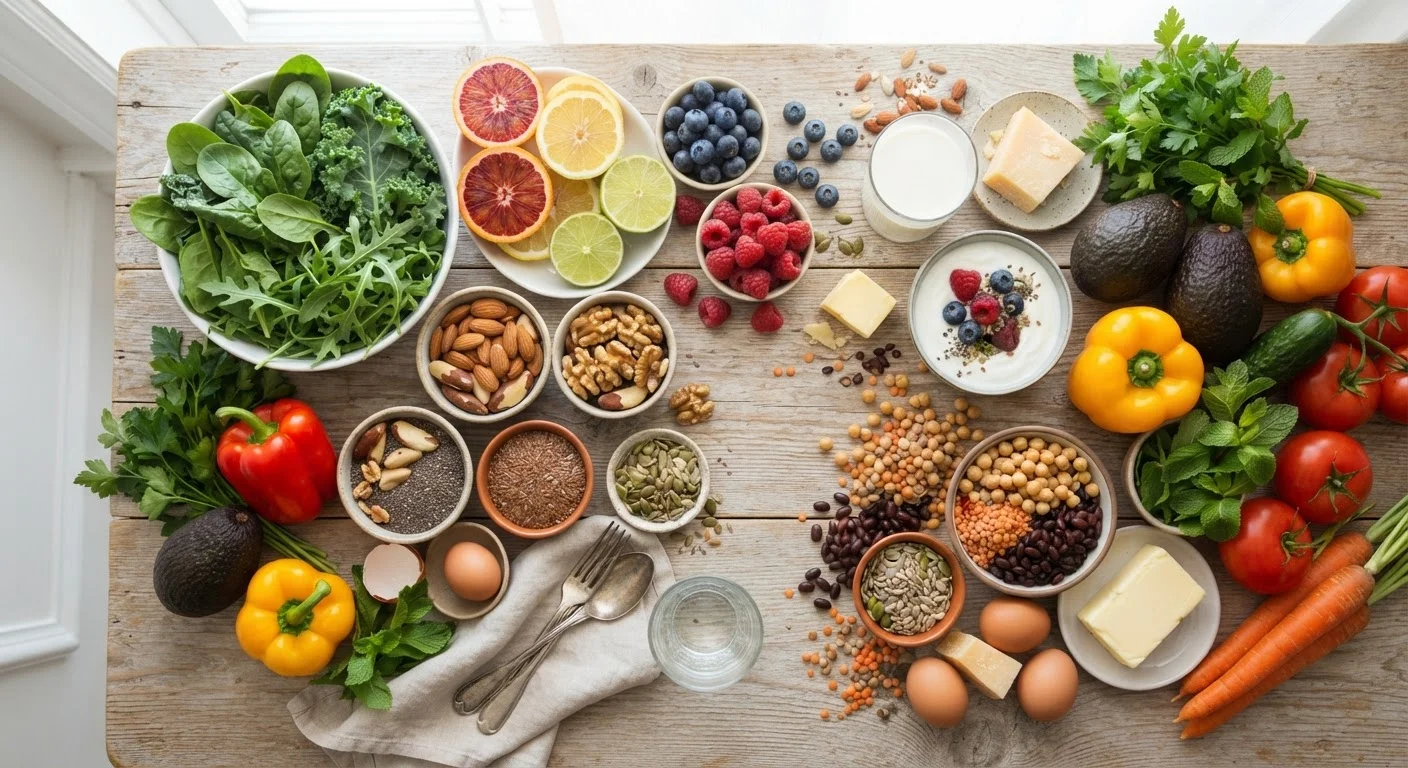
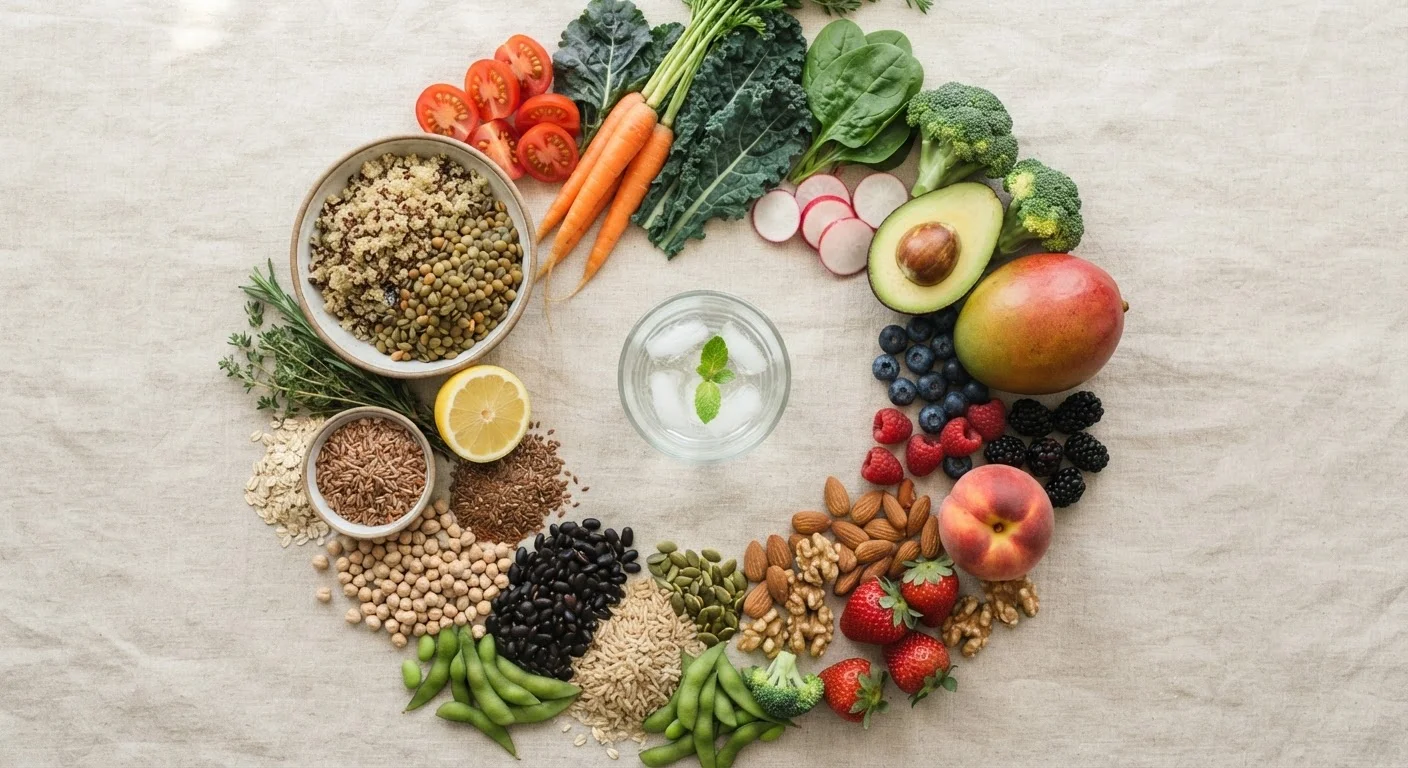
Many Americans think of hydration purely in terms of how much they drink, but a meaningful share of daily fluid intake comes from food. Fruits and vegetables in particular are largely water by weight - cucumbers, tomatoes, and watermelon, for example, are over 90% water. Cooked grains, legumes, and soups also contribute, though to a lesser degree.
Research from the National Academies of Sciences, Engineering, and Medicine estimates that food accounts for roughly 20% of total daily water intake for most people on a typical diet. That proportion rises significantly for people whose diets emphasize whole, minimally processed foods rich in produce. This is one of the reasons that well-studied dietary patterns like the Mediterranean approach - which are produce-heavy - tend to support hydration as a secondary benefit of their food composition.
Diet Composition Shifts Your Hydration Needs
What you eat meaningfully influences how much fluid your body requires. Sodium is the clearest example: diets high in sodium increase osmotic pressure in the blood, prompting the kidneys to retain water and triggering the thirst response. People who regularly eat high-sodium processed foods generally need more fluid intake to maintain balance.
Dietary fiber also has a relationship with water. Fiber absorbs water in the digestive tract, which helps form stool and supports regular bowel function - but only if fluid intake is sufficient. Increasing fiber without adequate hydration can have the opposite effect, contributing to constipation rather than alleviating it.
Protein metabolism generates nitrogenous waste products (primarily urea) that the kidneys must excrete in urine, requiring sufficient fluid. People who consume higher amounts of protein - whether from food or supplements - generally need to be more attentive to hydration to support kidney clearance. This is general information; anyone with kidney conditions should discuss fluid and protein intake with their healthcare provider directly.
A Simple Way to Track Hydration Quality
Rather than counting glasses, many nutrition professionals suggest using urine color as a daily reference point. Aim for pale yellow as a general indicator of adequate hydration. Pairing this habit with a weekly nutrition check-in can help you notice patterns between your food choices and how your hydration fluctuates.
Recognizing Your Body's Hydration Signals
Thirst is often described as a lagging indicator - meaning you may already be mildly dehydrated by the time you notice it. While this is broadly true, thirst remains a reasonably reliable guide for healthy adults in ordinary conditions. Urine color is a practical, low-effort indicator: pale yellow generally suggests adequate hydration, while dark yellow or amber urine is a signal to increase fluid intake.
The ability to read these internal signals is related to a broader body-awareness skill researchers call interoception. Understanding interoception - your capacity to sense internal body states - may help you respond more accurately to both hunger and thirst cues over time.
Where hydration estimates get genuinely complicated is in research methodology. Individual needs vary considerably based on body size, activity level, climate, and overall diet. Nutrition science faces real methodological challenges when trying to isolate specific intake targets that apply universally, and hydration research is no exception.
This article is for general informational and educational purposes only and is not a substitute for professional medical advice. Consult a qualified healthcare provider for guidance specific to your health needs.