Start with the Bag, Not the Clothes
Most packing mistakes begin before a single item is chosen. The moment you pull out a large suitcase, you've created a container your brain will try to fill. Experienced travelers choose their bag based on the trip length and type - then treat that constraint as fixed.
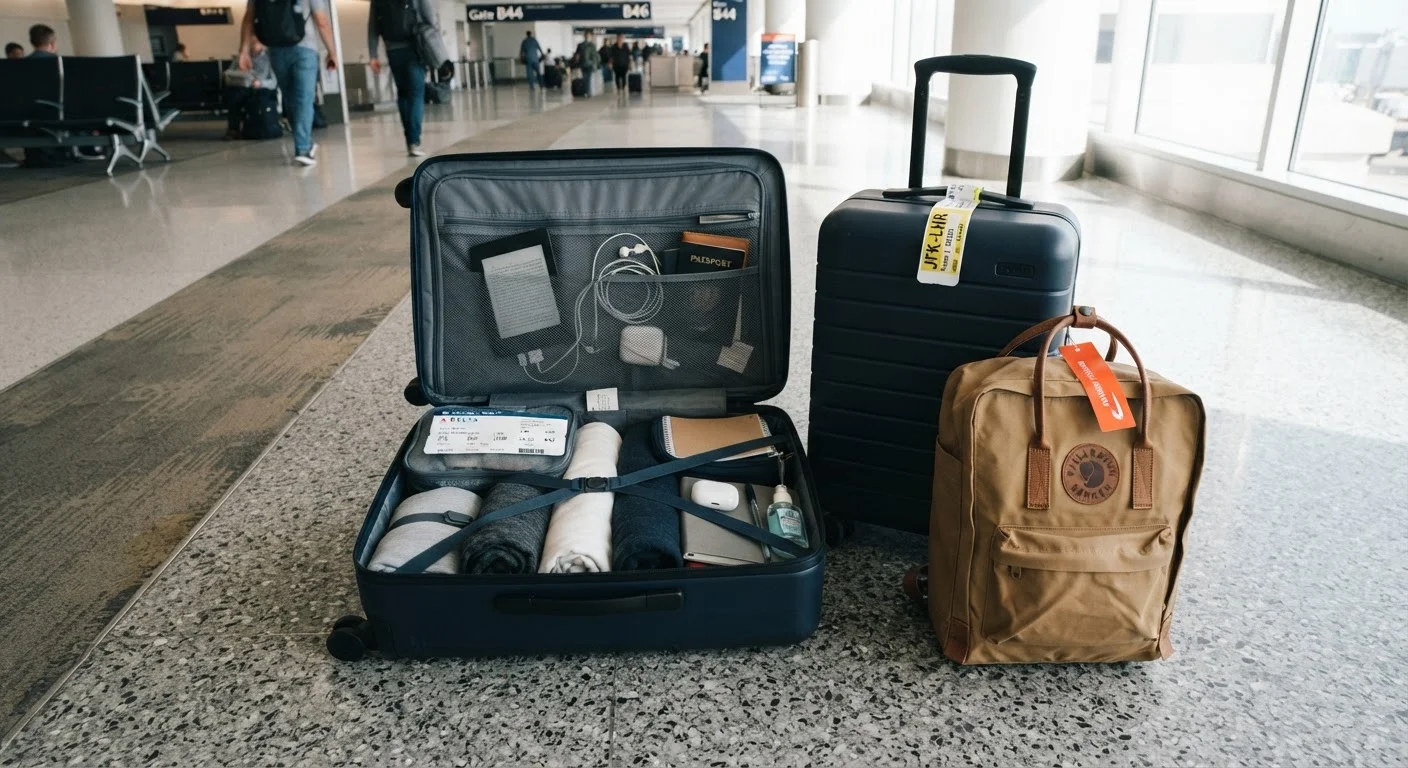
For trips of one to four days, a personal item or small carry-on is almost always sufficient. For one to two weeks with varied activities, a standard carry-on (typically 22" x 14" x 9") covers the majority of travelers. Checked luggage makes sense for longer stays, adventure gear, or family travel - but it adds time at baggage claim and exposes you to loss or delay risk.
Before committing to any bag size, it's worth reviewing your airline's actual policies. Allowances vary significantly by carrier and fare class. See how baggage allowances work across different fare classes to understand the fine print before you start loading up.
Set Your Bag Before You Pull Out Any Clothes
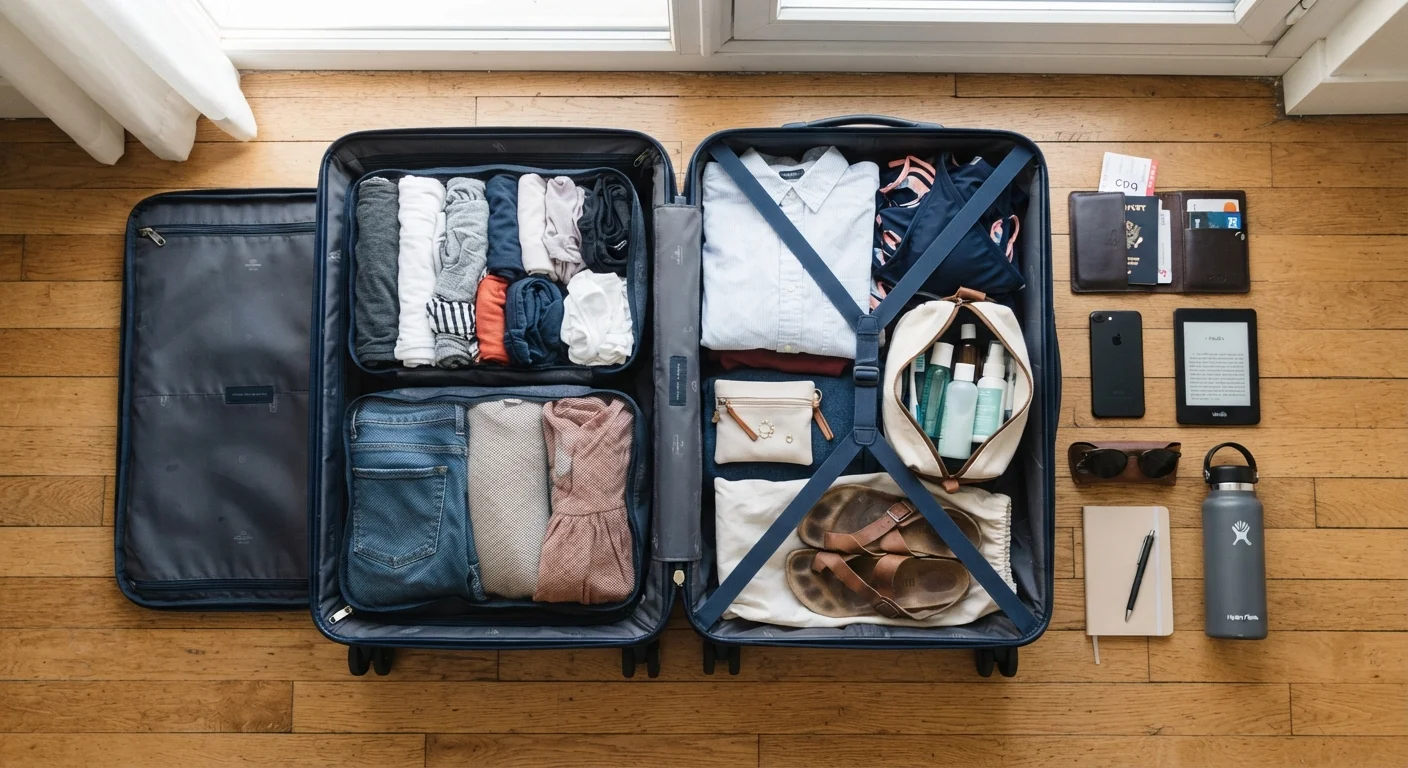
Decide on your bag first, then lay everything you think you want to bring on a bed before packing a single item. This forces a visual edit before anything goes in. Most travelers eliminate 20 to 30 percent of items at this stage simply by seeing everything together.
Build a Clothing System, Not a Clothing Pile
The most durable packing principle across all trip types is this: your clothes should work together, not just individually. A neutral base palette - navy, grey, black, white, khaki - allows most pieces to mix and match into multiple outfits, which means you carry fewer items without sacrificing flexibility.
Plan outfits, not garments. Write down the activities you'll actually do - a dinner, a hike, two transit days, beach time - and assign one outfit per scenario. Count what you need. Most travelers over-estimate by 30 to 50 percent. A realistic formula for a one-week trip: five to six tops, three bottoms, one layer, one pair of versatile shoes, one pair of activity-specific shoes.
Packing cubes help enforce this system. They compress clothing, keep categories separated, and make repacking fast. They're one of the few packing accessories that deliver consistent value regardless of trip type.
Apply the Non-Negotiable Rules for Valuables and Essentials
Regardless of how you check luggage, certain items should never leave your direct control. Medications, travel documents (passport, insurance cards, visas), electronics, cash, and any irreplaceable items belong in your carry-on. Airlines are not liable for valuables placed in checked bags, and delays happen - sometimes for multiple days.
The same logic applies to a day or two of clothing. A single change of clothes in your carry-on ensures that if your checked bag is delayed, you're not stranded. This is a minor inconvenience in packing space that pays off substantially when things go wrong.
TSA Liquids Rules Apply to Carry-On Bags
If you're flying within or from the United States, the TSA currently limits carry-on liquids to containers of 3.4 ounces (100ml) or less, all fitting in a single quart-sized clear bag. Rules can vary for international departures and arrivals, so verify the requirements for each leg of your trip with the relevant aviation authority before you fly.
For a fuller picture of how packing fits into overall trip preparation, the complete traveler's reference covers documents, health prep, and contingency planning alongside packing logistics.
Leave Room to Come Home
One of the most commonly overlooked packing principles: don't fill your bag completely on the way out. Travel typically generates volume - souvenirs, gifts, local purchases, items that accumulate. A bag packed to 75-80 percent capacity on departure gives you room to return without a gate-check fee or an awkward reshuffling session at the airport.
If you're traveling internationally and anticipate shopping, consider packing a lightweight foldable duffel bag inside your main luggage. It weighs almost nothing, takes up minimal space, and becomes a second checked bag on the return if needed - though always verify the cost of that additional bag with your carrier in advance.
Smarter packing connects directly to how smoothly a trip runs overall. Travelers who struggle with overpacked itineraries often face the same root issue as travelers who overpack bags - trying to do too much with too little margin. The parallels between overpacked bags and overpacked schedules are worth understanding before your next departure.