Why Some Cities Ask for More of Your Time
Not every destination is built for a two-night pass-through. Some cities are layered in ways that only reveal themselves gradually - through a neighborhood market discovered on day four, a conversation with a shopkeeper, or a quiet corner that doesn't appear on any top-ten list. For travelers willing to slow down, the payoff can be significant.
The cities below share a common quality: the longer you stay, the more coherent and textured the experience becomes. If you're still figuring out how to structure that kind of trip, our guide to building a well-paced itinerary walks through the practical mechanics of leaving room to breathe. And if you're weighing a long stay against a focused short trip, it's worth reading about how short international trips work best - it helps clarify what each format genuinely offers.
Lisbon, Portugal
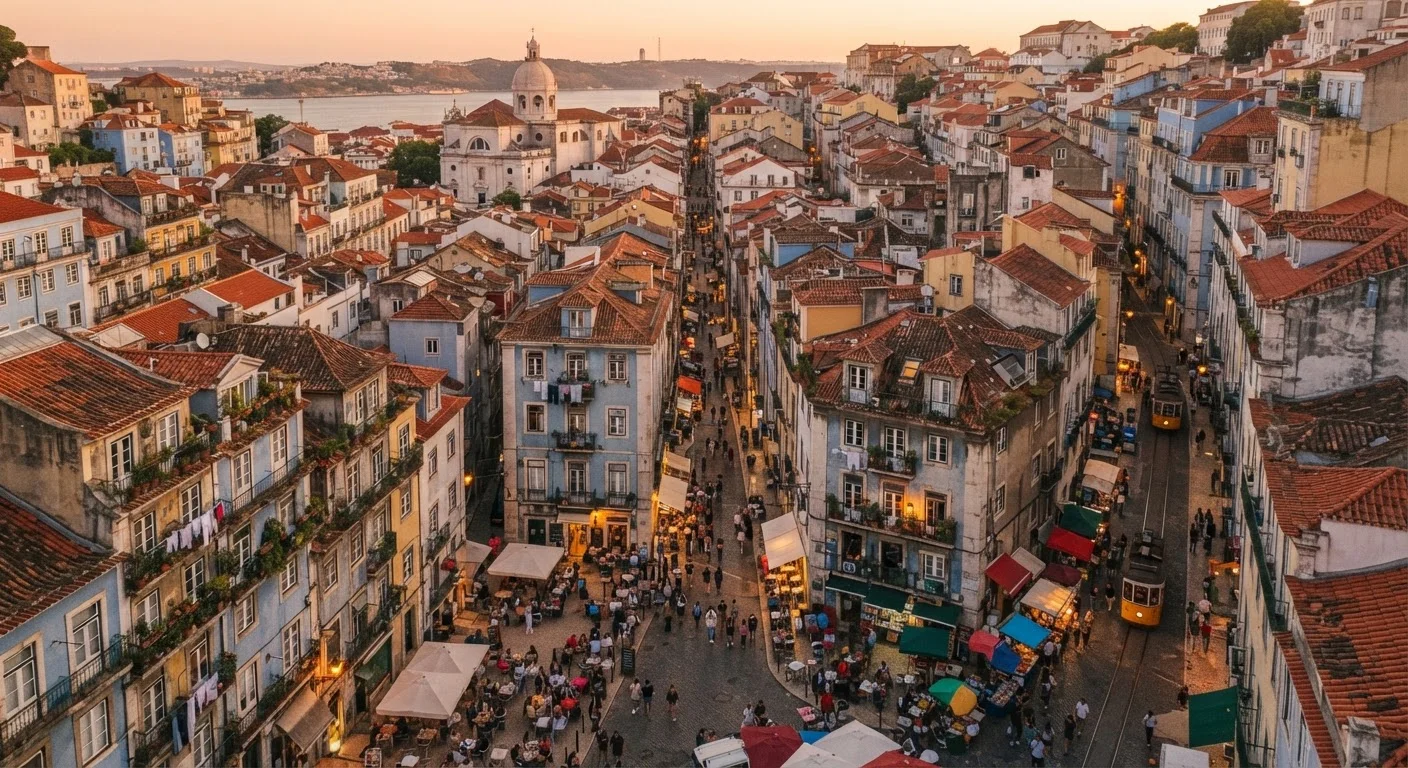
Lisbon operates on a logic that takes time to understand. Its seven hills divide the city into distinct neighborhoods - Alfama, Mouraria, Príncipe Real, LX Factory - each with its own atmosphere, demographic, and daily rhythm. A weekend visit tends to produce a surface reading: the tram, the viewpoints, the custard tarts. A week or more allows the city's quieter pleasures to surface: the neighborhood bakeries that open at 7am, the fado clubs that don't start until midnight, the weekend markets tucked into formerly industrial spaces.
Practically speaking, Lisbon's public transit is legible and affordable, making it easy to move between areas without a car. Long-stay apartment rentals are available across multiple neighborhoods, and the city's mild climate extends the usable outdoor season well beyond summer. Visitors should verify current entry requirements and any applicable tourism-fee structures directly with official Portuguese government sources before traveling.
Lisbon's neighborhoods each carry a distinct identity that only becomes clear after several unhurried days of exploration.
Osaka, Japan
Japan as a whole rewards slower travel, but Osaka in particular punches above its weight for extended stays. Unlike Tokyo, which can feel overwhelming in its scale, Osaka has a more navigable density. It's organized around distinct districts - Dotonbori, Shinsekai, Nakazakicho, Tennoji - that each have a clear identity without being tourist-only zones.
Osaka is also a practical base. Day trips to Kyoto, Nara, and Kobe are all under an hour by train, meaning a two-week stay in Osaka can anchor a much wider regional itinerary without requiring constant repacking. Food is a legitimate reason to stay longer: the city has a serious street food culture, and understanding the full range of what's available takes time. Travelers should check Japan's official tourism and immigration authorities for current entry and visa requirements before booking.
Osaka functions as a practical regional base, putting Kyoto, Nara, and Kobe within easy day-trip range.
Mexico City, Mexico
Mexico City is one of the largest urban areas in the Western Hemisphere, and its scale means that a short visit almost necessarily involves staying in one pocket of the city and missing most of the rest. Staying longer allows travelers to move between colonias - Roma Norte, Condesa, Coyoacán, Polanco, Centro Histórico - each of which functions almost like a separate city in terms of its food scene, architectural character, and social texture.
The city rewards travelers who build in time for the unexpected: a neighborhood parade, a weekend tianguis (open-air market), or a free museum day that wasn't on the original plan. Altitude is a real consideration - Mexico City sits above 7,300 feet, and some visitors experience mild adjustment symptoms in the first couple of days, which reinforces the practical case for not compressing too much into early arrivals. Always verify current health and safety advisories through the U.S. State Department or equivalent official sources before travel.
Mexico City's distinct colonias each offer their own character - a short visit barely scratches the surface.
Bologna, Italy
Bologna is often described as the most livable city in Italy, and that quality - which is largely about the density of daily pleasures rather than any single attraction - is precisely what makes it suit longer stays. The city has world-class food culture, a historic university that keeps the population young and the streets active, and a compact medieval center that's genuinely walkable without being purely touristy.
Compared to Florence or Rome, Bologna sees fewer short-stay visitors, which means the city retains a local character that can feel elusive in more heavily touristed Italian cities. There are enough museums, markets, day-trip options (Modena, Ferrara, Parma are all close), and food experiences to fill two weeks without strain. Travelers should verify current Schengen zone entry requirements and any applicable visa conditions well before departure. For those weighing Bologna against more resort-oriented options, our look at city breaks versus beach retreats in Europe provides useful framing.
Bologna's density of everyday pleasures - food, markets, academia - reveals itself most fully over an extended stay.
Medellín, Colombia
Medellín has undergone significant urban transformation over the past two decades, and understanding the city's present requires at least some familiarity with that arc - which takes time to absorb. The city's neighborhoods vary enormously in character, from the leafy, café-lined streets of El Poblado to the grittier, more locally oriented barrios of Laureles and Envigado. The famous gondola and cable car system connecting hillside communities to the metro is worth riding not just for the views but for what it reveals about how the city actually functions.
The climate - Medellín sits at roughly 5,000 feet and maintains a near-constant spring-like temperature - makes extended outdoor time comfortable year-round. The city is also a practical base for visiting the Coffee Region (Eje Cafetero) or taking day trips into the surrounding Andes. Travelers should consult U.S. State Department travel advisories and verify current entry requirements for Colombia before booking, and exercise standard urban awareness throughout their stay.
Medellín's elevation gives it a year-round spring climate, making extended outdoor exploration comfortable in any season.
Porto, Portugal
Where Lisbon can feel like a capital city in full motion, Porto has the character of a smaller, more intimate city that rewards the unhurried visitor. The historic Ribeira district, the wine lodges of Vila Nova de Gaia, the bookshops, the tiled facades, the beach at Matosinhos - none of these require rushing, and all of them gain something when you return a second or third time with more context.
Porto is also compact enough that walking is a genuine primary mode of transport, which makes extended stays logistically straightforward. The city connects easily to the Douro Valley wine region and to cities along Portugal's Green Coast, so a longer stay can include meaningful day trips without constant base-switching. As with any international destination, travelers should verify current entry rules and any regional travel advisories through official government sources before departing.
Porto's compact walkability and easy access to the Douro Valley make it an ideal slow-travel base in northern Portugal.
Planning Your Extended Stay
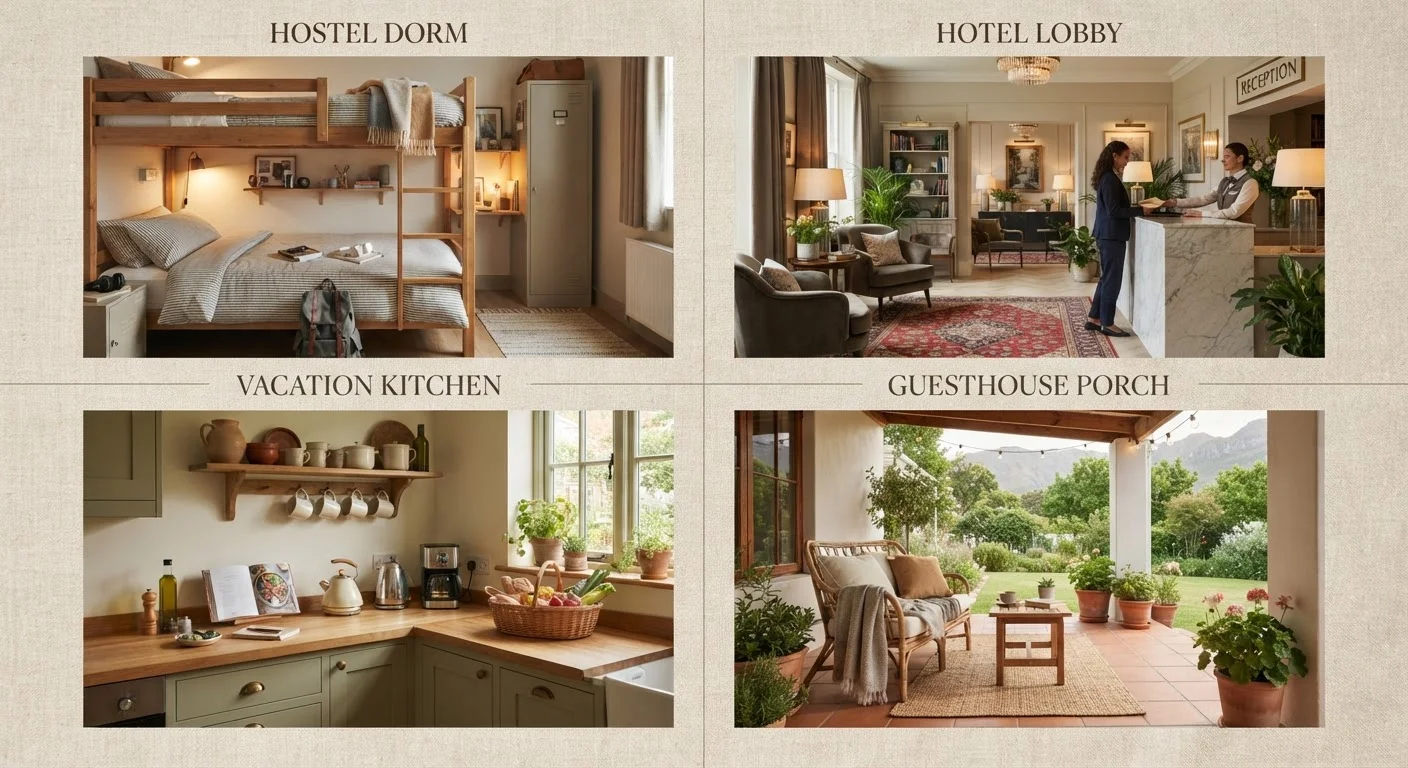
Committing to a longer visit changes your planning priorities. Accommodation becomes more central - a vacation rental or serviced apartment often suits multi-week stays better than a hotel, giving you kitchen access and a genuine neighborhood base. Our overview of accommodation types and their trade-offs is a useful starting point for matching your lodging to your pace.
Match Your Accommodation to Your Pace
For stays of a week or more, a furnished apartment or extended-stay rental often makes more practical sense than a hotel. Having a kitchen, laundry access, and a consistent neighborhood base significantly reduces daily logistical friction. Look for rentals in residential areas rather than tourist-dense zones - you'll typically get more space, better value, and a clearer sense of how the city actually operates day to day.
It's also worth setting realistic expectations about famous sites. Slower travel doesn't mean skipping landmarks - it means approaching them with more context. Many well-known attractions land differently in person than they appear in photos, and having extra days gives you the flexibility to visit at off-peak hours or return a second time. The goal isn't to see less - it's to see more clearly.